A leaking dehumidifier is usually caused by a blocked filter, kinked drain hose, poor positioning, a full or misaligned bucket, or a failing condensate pump. Follow these checks in order to find the cause and decide whether a part or replacement unit is needed.
A dehumidifier leaking on the floor usually has a drainage, airflow, positioning, or collection-bucket problem. Unplug the unit before inspecting it, wipe up standing water, and check the filter, hose, bucket, and floor position in that order. If water is near the power cord or outlet, stop using the dehumidifier until the area is dry and the cause is corrected.
1. Turn off and unplug the dehumidifier
Switch the unit off and disconnect it from power before removing the bucket, filter, or drain hose. Do not operate it with wet electrical connections. If the cabinet is damaged, the cord is frayed, or water has entered the control panel, have it inspected by a qualified appliance technician rather than continuing to troubleshoot it.
2. Check the air filter
A dirty filter can restrict airflow across the evaporator coil. The coil may become unusually cold and form ice, which later melts faster than the drain system can handle. Water can then overflow into the cabinet or onto the floor.
Remove the filter according to the owner's manual and look for dust, lint, or pet hair. If the filter is washable, rinse it only if the manufacturer permits it, then let it dry completely before reinstalling it. Replace a disposable or damaged filter with the correct type for the unit.
After cleaning the filter, allow any ice to melt naturally. Do not chip ice from the coil with a sharp tool or use high heat against the cabinet.
Product prices and availability are accurate as of the date/time indicated and are subject to change. Any price and availability information displayed on Amazon.com at the time of purchase will apply to the purchase of this product.
3. Inspect the drain hose for clogs and kinks
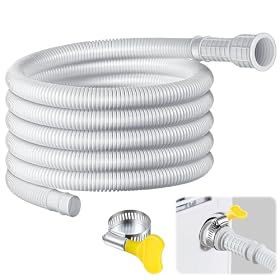
If the dehumidifier is set up for continuous drainage, a blocked, kinked, loose, or incorrectly routed hose is a common cause of floor leaks.
Check that:
The hose is firmly attached to the drain outlet.
The hose is not sharply bent, crushed, or clogged.
The hose slopes continuously toward the drain when the unit relies on gravity.
The hose end is not submerged in standing water.
The drain opening and hose connection are free of debris.
The hose is not routed uphill unless a pump is designed to move the water.
Disconnect the hose and inspect it for obstructions. Flush it only in a way permitted by the manufacturer, and replace it if it is split, soft, permanently kinked, or no longer fits securely. A gravity drain cannot move water uphill, so a condensate pump may be required when the drain is higher than the dehumidifier outlet.
Product prices and availability are accurate as of the date/time indicated and are subject to change. Any price and availability information displayed on Amazon.com at the time of purchase will apply to the purchase of this product.
4. Look for leaks around the hose connection and seals
Water may escape from the connection even when the hose itself is clear. Check the drain adapter, threaded fitting, rubber washer, cap, and nearby cabinet seams for moisture or cracks.
Tighten fittings by hand unless the manual specifies another method. Do not use excessive force or sealant that could damage plastic threads or block the drain passage. Replace a missing washer, cracked adapter, or damaged hose connection with a compatible part.
If water appears to come from inside the cabinet rather than the hose fitting, the internal drain pan, tubing, or seal may be damaged. These parts can be difficult to access and should be serviced according to the manufacturer's instructions.
Product prices and availability are accurate as of the date/time indicated and are subject to change. Any price and availability information displayed on Amazon.com at the time of purchase will apply to the purchase of this product.
5. Confirm the dehumidifier is level and set up correctly
A unit that is tilted can direct condensate away from the collection channel or cause the bucket to sit incorrectly. Place it on a firm, level surface with the clearances specified in the manual. Do not prop it up with loose objects or place it where a soft floor allows it to lean.
Also confirm that:
The collection bucket is fully inserted.
The bucket lid, float, and shutoff mechanism are positioned correctly.
Any continuous-drain plug or cap has been removed or installed as required.
The drain outlet being used matches the selected drainage mode.
The unit is not sitting in a location where splashback or a nearby appliance is the actual source of water.
If the leak occurs only when using the bucket, remove and reinstall the bucket carefully. A cracked bucket or damaged float assembly generally needs replacement.
6. Check whether the bucket is full or overflowing
When the bucket reaches its capacity, the dehumidifier should normally stop. If it is not sitting correctly, the shutoff float may not operate, or water may spill while the bucket is being removed.
Empty the bucket and inspect it for cracks near the handle, seams, drain plug, and corners. Clean sludge or debris from the float area without forcing the float. Never bypass the full-bucket shutoff.
If the bucket fills unusually quickly, inspect the room for a separate moisture source such as a plumbing leak, open window, wet foundation, or clothes dryer venting problem. A dehumidifier may collect a large amount of water in a damp space, but it should not leak when the drainage system is working correctly.
7. Inspect for frozen coils or restricted airflow
Ice on the coil is often linked to a dirty filter, blocked air intake or outlet, low room temperature, or another airflow problem. Some portable dehumidifiers are not designed to operate effectively in cold basements or unheated spaces.
Clean the filter, keep vents clear, and check the operating-temperature range in the manual. Turn the unit off and let the ice melt fully before restarting it. If the coil repeatedly freezes despite a clean filter, adequate airflow, and a suitable room temperature, a refrigerant-system or fan problem may be involved.
Do not attempt to add refrigerant or open the sealed refrigeration system yourself.
8. Check a hose-pump drainage setup
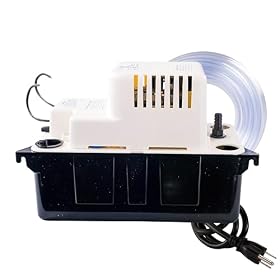
A condensate pump is needed when water must travel upward or over a long distance to reach a drain. If the pump reservoir is full, its float is stuck, the discharge hose is blocked, or the pump has lost power, water can back up and spill onto the floor.
With the system unplugged, check the pump reservoir and discharge hose for debris, kinks, and loose connections. Confirm that the pump is receiving power and that the hose outlet is not obstructed. Follow the pump and dehumidifier manuals for any priming or cleaning procedure.
If the pump hums but does not move water, cycles continuously, or leaks from its housing, replacement is usually more practical than attempting an electrical repair. Use a pump rated for condensate drainage and compatible with the installation.
9. When to replace a part or the dehumidifier
A replacement filter, drain hose, bucket, adapter, or condensate pump is reasonable when the part is visibly cracked, permanently blocked, incorrectly sized, or no longer seals. Match replacement parts by the exact dehumidifier model and follow the manufacturer's fitment instructions.
Consider replacing the dehumidifier or arranging professional service when:
It leaks from the sealed cabinet or refrigeration area.
The fan does not run or the compressor repeatedly trips protection.
The unit freezes again after airflow and temperature checks.
There is a burning smell, damaged wiring, or water near electrical components.
A compatible bucket, drain fitting, or control part is no longer available.
Repair costs approach the cost of a suitable replacement unit.
Do not continue operating a unit that trips a breaker, gives off a burning odor, or has damaged electrical parts. For those problems, unplug it and consult the manufacturer or a qualified appliance professional.
Quick diagnosis checklist
Unplug the dehumidifier and dry the area.
Clean or replace the filter.
Check the hose for clogs, kinks, uphill routing, and loose connections.
Inspect hose fittings, washers, caps, and cabinet seams.
Level the unit and reseat the bucket.
Check the bucket, float, and drain outlet for cracks or debris.
Let any frozen coil thaw and verify the operating temperature.
Inspect a condensate pump if the installation uses one.
Stop using the unit and arrange service if the leak is internal or electrical.
FAQ
Why is my dehumidifier leaking from the bottom?
Common causes include a clogged or kinked drain hose, a full or cracked bucket, a unit that is not level, a dirty filter causing coil icing, or an internal drain pan or tubing problem. Unplug the unit and check the filter, drainage path, bucket, and floor position before using it again.
Can a dirty filter make a dehumidifier leak?
Yes. A severely dirty filter can restrict airflow and cause the coil to ice over. When the ice melts, water may overflow the normal drainage path. Clean or replace the filter as directed by the manufacturer and let the ice melt naturally.
Why does my dehumidifier leak when using a hose?
The hose may be blocked, kinked, loose, cracked, routed uphill, or connected with a missing or damaged washer. Check the entire hose path and connection. If the drain is higher than the outlet, a compatible condensate pump may be necessary.
Should I repair or replace a leaking dehumidifier?
Replace a damaged filter, hose, bucket, fitting, or condensate pump when the part is compatible and readily available. Professional service or replacement of the whole unit is more appropriate for internal leaks, repeated coil freezing, compressor or fan faults, damaged wiring, or refrigerant-system problems.