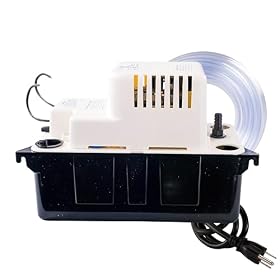
A separate condensate pump can let a dehumidifier drain continuously when a floor drain or gravity-fed route is unavailable. Check the pump’s lift rating, hose connection, reservoir capacity, safety shutoff, and compatibility with your dehumidifier before buying.
A separate condensate pump is useful when your dehumidifier cannot drain by gravity into a nearby floor drain, sink, or standpipe. Before buying one, confirm that the pump can handle the water volume, lift the condensate to the intended drain point, connect to the dehumidifier’s outlet, and shut the system down if the discharge line becomes blocked.
When you need a separate condensate pump
Most dehumidifiers can drain continuously through a hose if the drain point is lower than the unit’s drain outlet. A pump becomes necessary when:
The drain is higher than the dehumidifier.
The available drain is far away or across the room.
You need to route water to a utility sink, laundry drain, or other elevated discharge point.
The dehumidifier is installed in a basement, crawlspace, or enclosed mechanical area without a suitable gravity drain.
You want to avoid repeatedly emptying the collection bucket.
A pump is not automatically better than a gravity hose. If a short, continuously downward hose will work, gravity drainage is usually simpler because it has no pump motor, reservoir, or electrical connection to maintain.
Check compatibility before buying
Confirm the dehumidifier’s continuous-drain outlet
Look at the dehumidifier manual and the drain outlet. Some units accept a hose directly; others require a supplied adapter, a threaded fitting, or a specific hose size. Do not assume that a hose or pump connection will fit just because it looks similar.
Check:
The outlet diameter and fitting style.
Whether the outlet uses a removable plug or adapter.
Whether the drain outlet is designed for continuous operation.
Whether the manual specifies a particular hose size or routing method.
A pump’s intake connection must attach securely to the dehumidifier’s drain hose or to a small receiving reservoir. Avoid forcing a mismatched fitting into place or relying on a loose connection sealed only with tape.
Match the pump to condensate, not general wastewater
Choose a pump intended for condensate removal from equipment such as dehumidifiers, air conditioners, or furnaces. These pumps are designed for relatively clean water. A general utility pump may be unnecessarily large, lack the right connections, or lack the automatic shutoff features needed for unattended condensate drainage.
If the water may contain sediment, mold debris, or other contaminants, follow the pump manufacturer’s guidance. Keep the pump reservoir clean so buildup does not interfere with the float or inlet.
Product prices and availability are accurate as of the date/time indicated and are subject to change. Any price and availability information displayed on Amazon.com at the time of purchase will apply to the purchase of this product.
Specifications that affect the purchase
Maximum lift and total discharge distance
The most important specification is the pump’s maximum vertical lift, sometimes called head height. Measure from the pump’s position to the highest point the water must reach—not merely to the drain opening.
Also account for:
Vertical rise from the pump to the high point.
Horizontal hose distance.
Bends and restrictions in the hose.
The height of the final discharge point.
A pump operating near its maximum lift may move water slowly or fail to keep up with the dehumidifier. Choose a model with meaningful capacity above your measured requirement, while staying within the manufacturer’s stated limits. Do not rely on the maximum lift alone; check the pump’s performance information if it provides flow data at different lift heights.
Reservoir capacity and activation method
The pump’s reservoir should collect enough water for the pump to activate reliably without constant cycling. Automatic float activation is common, but the float must be able to move freely and should not be obstructed by the hose or nearby objects.
A larger reservoir is not always better. A compact pump may fit more easily beside a dehumidifier, while a larger unit may provide more operating margin. Choose based on available space, expected condensate production, and the manufacturer’s compatibility guidance.
Overflow protection
Look for an automatic overflow or high-water shutoff connection. This feature can stop the dehumidifier when the pump reservoir fills because of a clogged hose, failed pump, stuck float, or power interruption.
The shutoff must be connected correctly to provide protection. If the dehumidifier does not support an external shutoff connection, consider how you will detect a failure and protect the surrounding floor. Never bypass a safety switch to keep the unit running.
Hose size and included fittings
The pump may use a narrow discharge tube rather than the larger hose connected to the dehumidifier. Verify the required tubing diameter, maximum hose length, and whether the necessary adapter or check valve is included.
Use the type of tubing specified by the pump manufacturer. A kinked, crushed, excessively long, or undersized discharge line can reduce flow and cause the pump to run continuously or overflow.
Electrical requirements
Check the pump’s voltage, plug type, power cord length, and installation instructions. Keep electrical connections away from standing water, use a properly grounded outlet where required, and follow applicable electrical codes and manufacturer instructions.
Do not use a damaged cord, overloaded extension cord, or power connection positioned where a leak can reach it. If the installation requires new wiring, a dedicated circuit, or work in a wet location, consult a qualified electrician.
Product prices and availability are accurate as of the date/time indicated and are subject to change. Any price and availability information displayed on Amazon.com at the time of purchase will apply to the purchase of this product.
How a separate pump is typically installed
The exact arrangement varies by product, but the general setup is:
Place the pump on a stable, level surface near the dehumidifier.
Connect the dehumidifier’s continuous-drain hose to the pump reservoir or intake fitting.
Attach the specified discharge tubing to the pump outlet.
Route the discharge line to the drain without kinks or low spots that can trap water.
Secure the hose so it cannot whip, pull loose, or discharge onto the floor.
Connect the pump’s overflow shutoff to the dehumidifier if both products support that function.
Plug in the pump and dehumidifier as directed by their manuals.
Pour a small amount of clean water into the pump reservoir and confirm that it starts, discharges properly, and stops automatically.
Check every connection for leaks before leaving the system unattended.
The discharge line should terminate at an approved drain location and should not be inserted in a way that allows contaminated water to flow back into a potable-water supply. Follow local plumbing requirements where applicable.
Product prices and availability are accurate as of the date/time indicated and are subject to change. Any price and availability information displayed on Amazon.com at the time of purchase will apply to the purchase of this product.
Pump versus a longer drain hose
A longer hose is preferable when it can maintain a continuous downward slope from the dehumidifier to the drain. This arrangement is quiet, consumes no additional electricity, and has fewer failure points.
Buy a pump separately when the drain route must rise, the hose cannot maintain a downward slope, or the unit must discharge to a distant elevated location. If the hose would need to run uphill before reaching the drain, gravity drainage will not be reliable without a pump.
Common buying and setup mistakes
Buying by connection size alone: A fitting that attaches does not prove that the pump has enough capacity or the correct shutoff arrangement.
Ignoring vertical lift: Measure the highest point in the route, not just the distance across the room.
Using a hose with low spots: Trapped water can restrict flow and encourage buildup.
Leaving the overflow switch disconnected: A pump can fail even when the dehumidifier is working normally.
Placing the pump where it cannot be serviced: Leave access to the reservoir, float, tubing, and electrical connection.
Routing water near electrical equipment: Secure the line and provide a safe discharge path.
Assuming the pump is maintenance-free: Inspect the reservoir, inlet, float, and discharge tubing periodically.
When to replace the pump or choose another solution
Replace the pump when its motor runs but it no longer moves water, the float sticks repeatedly after cleaning, the housing leaks, or the power cord is damaged. If the pump frequently runs without stopping, first check for a clogged or kinked discharge line and confirm that the lift requirement is within its rating.
A replacement pump is reasonable when the dehumidifier itself still works and the drain arrangement remains suitable. Replace or reconsider the entire setup when the dehumidifier leaks internally, cannot maintain continuous drainage, lacks a compatible drain outlet, or produces more condensate than the pump and drainage system can safely handle.
If water has reached an electrical outlet, wiring, or other hazardous equipment, disconnect power only if it is safe to do so and have the installation inspected by a qualified professional. Always prioritize the dehumidifier and pump manufacturers’ instructions over generic installation advice.
FAQ
Can I use any condensate pump with a dehumidifier?
No. Check the pump’s intended application, intake connection, discharge tubing size, lift rating, electrical requirements, and overflow-shutoff compatibility with the dehumidifier.
How do I know what pump lift rating I need?
Measure the vertical distance from the pump to the highest point in the discharge route, then account for hose bends and the final drain location. Choose a pump with capacity above that requirement rather than operating at its stated maximum.
Does a dehumidifier still need its drain hose when using a condensate pump?
Usually, yes. The dehumidifier’s continuous-drain hose normally carries water into the pump reservoir or intake. The pump then sends the water through a separate discharge tube to the drain.
Is a condensate pump better than gravity drainage?
Only when the drain route requires an uphill run or cannot maintain a continuous downward slope. Gravity drainage is simpler and has fewer components when the layout permits it.
How often should a dehumidifier condensate pump be cleaned?
Follow the pump manufacturer’s maintenance schedule. In general, inspect the reservoir, float, inlet, and discharge tubing periodically and clean them when sediment, slime, or debris appears.