The best dehumidifier for a garage gym has enough moisture-removal capacity for the space, works reliably in cooler temperatures, and supports a practical drainage setup. Here is what to look for before buying.
What do you need help with?
Open an answer, or tell us what we should cover next.
Answered in this guide
Choose the best dehumidifier for a garage gym
Choose a unit with enough moisture-removal capacity, reliable cold-weather operation, a practical drainage option, and suitable noise and placement characteristics for your garage gym.
Match the unit’s pint-per-day rating to the garage gym’s size and moisture conditions, while allowing for lower real-world performance when the garage is cold.
Check whether a dehumidifier works in a cold garage
Look for a dehumidifier designed to operate reliably at the temperatures your garage reaches, since compressor performance can drop in colder conditions.
Request a topic and help us choose what to build next.
Install a permanent drain or condensate pump
Fix high humidity when the dehumidifier is not enough
Prevent moisture from entering the garage
Requests help us prioritize the next guide. No email required.
One anonymous request per topic.
A garage gym usually needs a dehumidifier that can handle changing temperatures, concrete floors, open doors, and moisture from people exercising. For many single-car garages, a portable unit in the roughly 35- to 50-pint range is a reasonable starting point, but the right capacity depends on the garage’s size, humidity level, insulation, and moisture sources. Choose a model rated for the temperatures in your garage, and prioritize continuous drainage if you do not want to empty a bucket after every workout.
What makes a dehumidifier good for a garage gym?
A garage-gym dehumidifier should provide five things:
Sufficient moisture-removal capacity: The unit must be able to reduce humidity without running constantly.
Low-temperature suitability: Garages can be much colder than indoor living spaces, especially overnight or during winter.
A practical drainage option: A hose connection or condensate pump is more convenient than relying on the collection bucket.
Manageable noise: Exercise equipment and music already create noise, so a quieter operating mode can be useful.
Durable, safe placement: The unit needs clearance from weights, moving equipment, water, and vehicle traffic.
A target relative humidity of about 40% to 60% is generally suitable for a garage gym. A hygrometer is useful because humidity can feel acceptable while still promoting condensation, rust, mildew, and musty odors.
Choose the right capacity
Dehumidifier capacity is usually expressed as pints of water removed per day. The advertised rating is based on standardized test conditions, so actual performance can vary substantially in a cold or unusually damp garage.
Use the garage’s conditions—not just its floor area—to choose capacity:
Small, enclosed, moderately damp garage: A smaller portable unit may be adequate if the space is reasonably sealed.
Typical single-car garage or garage with regular workouts: A unit around the mid-capacity range is often a sensible starting point.
Large, poorly sealed, or very damp garage: Consider a higher-capacity unit, especially if there is condensation, water intrusion, or a damp concrete slab.
Garage connected to other damp areas: A single portable unit may not control humidity evenly throughout the entire space.
Oversizing is not always a problem, but the unit still needs to operate in the garage’s temperature range. A larger unit that frequently freezes or shuts down may perform worse than a smaller model designed for cool conditions.
If humidity remains high after several hours of operation, check for water intrusion, open doors, unsealed walls, and leaks before simply buying a larger dehumidifier.
Product prices and availability are accurate as of the date/time indicated and are subject to change. Any price and availability information displayed on Amazon.com at the time of purchase will apply to the purchase of this product.
Pay attention to cold-weather operation
This is one of the most important differences between a garage gym and a finished basement or bedroom. Compressor-based dehumidifiers can accumulate frost on their coils when operating in low temperatures. Many units periodically stop dehumidifying to defrost, and some are not intended for use below a specified temperature.
Before buying, check the manufacturer’s instructions for:
Minimum operating temperature
Automatic defrost behavior
Whether the unit is intended for unheated spaces
Whether performance or capacity ratings change at lower temperatures
If the garage regularly approaches freezing, a standard portable compressor dehumidifier may not be the right solution. Improving insulation, sealing air leaks, reducing water entry, or using equipment specifically designed for low-temperature operation may be more effective. Do not operate a unit outside its stated temperature range.
Product prices and availability are accurate as of the date/time indicated and are subject to change. Any price and availability information displayed on Amazon.com at the time of purchase will apply to the purchase of this product.
Continuous drainage is usually worth it
A full collection bucket can stop the dehumidifier, which is inconvenient if the garage is unattended. Look for a unit with a built-in continuous-drain connection if you have a suitable floor drain, sink, or other approved drain point.
When setting up a drain hose:
Confirm that the hose connection and diameter match the manufacturer’s instructions.
Route the hose continuously downhill whenever possible.
Secure the hose so it cannot kink or pull loose.
Keep the discharge point from backing up or becoming submerged.
Check for leaks during the first several hours of operation.
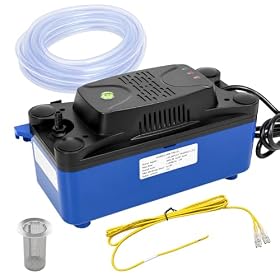
If the drain is higher than the dehumidifier or far away, a condensate pump may be necessary. Use a pump rated for condensate and follow both the dehumidifier and pump instructions. Never improvise an electrical connection near standing water.
Product prices and availability are accurate as of the date/time indicated and are subject to change. Any price and availability information displayed on Amazon.com at the time of purchase will apply to the purchase of this product.
Consider noise and placement
A garage gym does not need bedroom-level quiet, but noise can still matter if the garage is attached to the home or you exercise while others are nearby. Look for published sound information when available, but remember that fan speed and compressor cycling affect the actual noise level.
Place the unit:
On a level, stable surface
Away from barbells, plates, benches, treadmills, and moving equipment
Away from splashing water and vehicle exhaust
With the manufacturer’s required clearance around the air intake and outlet
Where the drain hose can remain secure
Do not cover the unit or block its vents. Avoid placing it directly beneath a roof leak or where condensation can drip onto electrical components. Plug it into a properly grounded outlet and follow the manufacturer’s electrical requirements. If the outlet, cord, or plug becomes hot, damaged, or wet, stop using the unit and have the issue evaluated by a qualified professional.
Features that affect the buying decision
Humidistat and automatic operation
A built-in humidistat lets you set a target humidity instead of running the unit continuously. This can reduce unnecessary operation and help maintain a more stable environment for metal equipment, flooring, and stored materials.
Auto-restart
Auto-restart allows some units to resume operation after a power interruption. This is useful in a garage that is not occupied all day, but confirm how the feature works rather than assuming every model includes it.
Bucket-full shutoff
This is a basic safety and convenience feature. Even if you plan to use continuous drainage, the bucket-full shutoff provides protection if the hose disconnects or the drain becomes blocked.
Washable or replaceable filter
Garage air can contain dust, chalk, sawdust, and other particles. A removable filter that can be cleaned according to the instructions is valuable. A clogged filter reduces airflow and can contribute to poor moisture removal or coil icing.
Casters and handles
A garage gym may need to share space with a vehicle or equipment. Wheels and a sturdy handle make it easier to move the dehumidifier, but do not move it while the bucket is full or while a drain hose is attached unless the setup is designed for that movement.
How to use a dehumidifier in a garage gym
Start with a hygrometer placed away from the dehumidifier’s exhaust. Set the unit near the middle of the usable gym area, leaving the specified clearance around it. Keep garage doors and windows closed while the unit is operating if practical; otherwise, outdoor humid air can replace the air the dehumidifier just dried.
Run the unit until the humidity reaches the desired range, then let the humidistat cycle it on and off. During hot, humid weather or after a particularly crowded workout, the unit may need to run longer. Wipe sweat and standing water from floors and equipment, because a dehumidifier is not a substitute for cleaning or fixing water intrusion.
For equipment protection, pay attention to condensation on metal surfaces. If bars, plates, racks, or fasteners are developing surface rust, humidity may be too high, air movement may be poor, or water may be entering the garage.
Water enters through the foundation or garage door.
The roof or plumbing leaks.
The garage has severe condensation from uninsulated surfaces.
Doors remain open for long periods in humid weather.
The space is much larger or more open than the unit is designed to handle.
Humidity stays high despite correct drainage, clean filtration, and appropriate operation.
Address leaks and drainage first. Sealing obvious air gaps, improving ventilation where appropriate, and insulating cold surfaces can make a bigger difference than upgrading to a larger appliance. If moisture is causing structural damage or persistent mold, consult a qualified building or moisture professional.
Bottom line
For most garage gyms, look for a portable dehumidifier with capacity suited to the garage’s size and dampness, a humidistat, a washable filter, automatic defrost, and continuous-drain capability. Low-temperature operating specifications matter more in an unheated garage than extra convenience features. Add a condensate pump if gravity drainage is unavailable, and use a hygrometer to confirm that the unit is actually keeping humidity under control.
FAQ
What size dehumidifier is best for a garage gym?
For many single-car garages, a mid-capacity portable dehumidifier is a reasonable starting point, but the correct size depends on garage area, temperature, insulation, and moisture level. A very damp, poorly sealed, or larger garage may require more capacity.
Can I use a regular dehumidifier in an unheated garage?
Only if the manufacturer lists the garage’s temperature range as acceptable. Compressor-based units can frost or cycle into defrost mode in cold conditions, reducing moisture removal. Check the minimum operating temperature before purchase.
Should a garage-gym dehumidifier run continuously?
It may need to run continuously while bringing a damp garage down to the target humidity. After that, use the humidistat to cycle the unit on and off. If it runs constantly without lowering humidity, check the filter, drainage, air leaks, and water intrusion.
How do I drain a dehumidifier in a garage?
Use the manufacturer-approved continuous-drain connection with a hose routed downhill to a suitable drain. If gravity drainage is not possible, use a compatible condensate pump and follow its installation and electrical-safety instructions.
Why is my garage gym still humid with a dehumidifier running?
A dirty filter, blocked hose, poor placement, open doors, excessive air leakage, water intrusion, or a unit operating below its rated temperature can all cause poor results. Check these causes before replacing the dehumidifier.