Best dehumidifier for a finished basement living area
The best dehumidifier for a finished basement living area should control humidity quietly, operate reliably in cooler conditions, and offer a convenient drainage plan. Use this guide to choose the right capacity and features for your space.
A finished basement living area needs more than basic moisture removal. The best dehumidifier should control humidity without being disruptive, work in a potentially cool basement, and drain conveniently enough that the water bucket does not become a daily chore. For many spaces, a portable compressor dehumidifier with an adjustable humidistat, automatic defrost, continuous-drain capability, and a relatively quiet operating mode is the most practical choice.
What to look for first
Choose capacity for moisture load, not just floor area
Dehumidifier capacity is commonly expressed in pints of water removed per day. The right capacity depends on more than the basement’s square footage. Consider:
Whether the basement feels slightly damp or consistently wet
How many people regularly use the living area
Whether laundry, showers, or other moisture sources are nearby
How often the space floods or develops condensation
How well the basement is sealed and insulated
Whether the unit must serve adjoining rooms through open doorways
A smaller unit may work in a dry, enclosed finished room, while a larger-capacity unit is more appropriate for a broad open basement, multiple connected rooms, or a space with persistent dampness. An oversized unit is not automatically better: it can cost more, take up more room, and may be louder. However, a unit that is too small may run constantly without keeping humidity under control.
Published capacity ratings are based on test conditions, and actual water removal changes with temperature and humidity. Treat the rating as a comparison point rather than a guarantee of performance in your basement.
Prioritize quiet operation in living spaces
A basement family room, bedroom, office, or media area makes noise more noticeable than an unfinished utility room. Look for a clearly stated sound rating if one is provided, along with a lower fan-speed setting or sleep mode.
A quiet setting usually removes moisture more slowly. That is often acceptable once the room reaches the desired humidity level, but a higher fan speed may be useful during initial drying or unusually damp weather. Place the unit where air can circulate freely, rather than inside a cabinet, tight alcove, or directly against furniture.
Check low-temperature operation
Basements can be cooler than the rest of the house, especially in spring, fall, or winter. Standard compressor dehumidifiers can accumulate frost on their coils when operating in cool conditions. An automatic-defrost feature pauses or changes operation to clear that frost and helps prevent inefficient operation.
Check the manufacturer’s specified operating-temperature range before buying. If the basement regularly approaches the lower end of that range, choose a model designed for cooler spaces or consider whether a different moisture-control approach is needed. Do not operate a unit below its stated temperature range.
Drainage can matter more than capacity
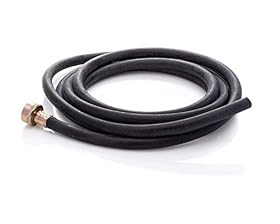
A built-in bucket is convenient for occasional use, but it may fill quickly in a damp basement. For regular operation, look for a unit that supports continuous drainage through a hose connection.
Gravity drainage
Gravity drainage is usually the simplest option when the dehumidifier can sit above a suitable floor drain, sump basin, or other approved drain point. The hose must slope continuously downward and should not be kinked or routed uphill. Follow the manufacturer’s instructions for hose size and connection.
Pump-assisted drainage
If the nearest drain is higher than the dehumidifier or far away, a built-in pump or separate condensate pump may be necessary. Confirm the pump’s lift capability and hose-routing requirements rather than assuming any pump will work with any unit.
A pump adds convenience but also adds another component that can clog or fail. Inspect the pump, hose, and discharge point periodically, especially if unattended operation could cause water damage.
Product prices and availability are accurate as of the date/time indicated and are subject to change. Any price and availability information displayed on Amazon.com at the time of purchase will apply to the purchase of this product.
Features worth paying for
Adjustable humidistat: Lets you set a target humidity instead of running the unit continuously.
Automatic restart: Useful after a power interruption, particularly when the basement is unattended.
Full-bucket shutoff: Helps prevent overflow when the bucket fills.
Washable or replaceable filter: A clean filter supports airflow and helps protect the internal components.
Automatic defrost: Important for cooler basement conditions.
Product prices and availability are accurate as of the date/time indicated and are subject to change. Any price and availability information displayed on Amazon.com at the time of purchase will apply to the purchase of this product.
How to set up a dehumidifier in a finished basement
Place it on a level, stable surface with the clearances specified by the manufacturer.
Keep doors and windows closed while the unit is operating, unless outdoor air is specifically part of your moisture-control plan.
Avoid blocking the intake or exhaust with walls, curtains, boxes, or furniture.
Set the humidistat to a moderate target and adjust it based on a reliable room hygrometer if needed.
Route a drain hose so it cannot kink, disconnect, or create a trip hazard.
Keep the filter clean according to the care instructions.
A moderate indoor relative humidity setting is generally more comfortable than trying to remove every trace of moisture. If the room remains damp despite continuous operation, investigate water intrusion, plumbing leaks, poor drainage, condensation, or inadequate basement sealing. A dehumidifier cannot correct an active leak or structural moisture problem.
When to choose a different solution
A portable dehumidifier is a good fit when you need flexible placement or seasonal moisture control. A whole-home or ducted system may make more sense when several floors are affected, the basement is open to the rest of the house, or carrying and draining a portable unit is inconvenient.
If a dehumidifier frequently ices over, shuts off early, leaks, makes unusual electrical noises, or fails to lower humidity after the filter and drainage setup have been checked, unplug it and consult the manufacturer’s troubleshooting guidance. Refrigerant-system repairs and electrical repairs should be handled by a qualified technician. Replace the unit when repair cost, repeated failures, corrosion, or obsolete drainage needs make continued operation impractical.
Bottom line
For a finished basement living area, prioritize a capacity suited to the moisture load, quiet operation, automatic defrost, an adjustable humidistat, and a dependable drainage option. If the basement is cool or the unit will run unattended, temperature-range information, automatic restart, and continuous drainage become especially important. The best choice is the one that can maintain comfortable humidity without excessive noise or constant bucket emptying.
FAQ
What size dehumidifier is best for a finished basement?
Choose capacity based on the basement’s floor area, moisture level, connected rooms, insulation, and how often the space feels damp. A larger-capacity unit is generally more suitable for an open or persistently damp basement, while a smaller unit may be adequate for a dry, enclosed finished room. Compare manufacturer capacity guidance and remember that real-world output varies with temperature and humidity.
Should a basement dehumidifier have a pump?
A pump is useful when the available drain is higher than the dehumidifier or cannot be reached with a continuously downward-sloping hose. If a floor drain or sump basin is nearby and below the unit, gravity drainage may be simpler and more reliable.
What humidity should a finished basement have?
Use the dehumidifier’s humidistat to maintain a comfortable, moderate indoor humidity level rather than running it continuously. A separate hygrometer can help verify the reading, especially if the built-in sensor is near the unit or the basement has several rooms.
Why does a basement dehumidifier freeze up?
Common causes include operating the unit below its specified temperature range, restricted airflow from a dirty filter or blocked intake, and mechanical problems. Clean or replace the filter as directed, confirm that air can circulate, and check the operating-temperature requirements. If icing continues, stop using the unit and contact the manufacturer or a qualified technician.