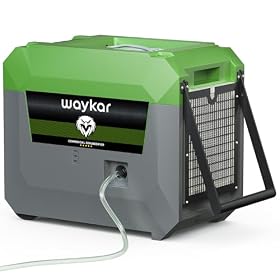
Using a condensate pump with a portable dehumidifier
A condensate pump lets a portable dehumidifier drain automatically when a floor drain or sink is not nearby. Here is how to choose, connect, and troubleshoot the setup.
What do you need help with?
Open an answer, or tell us what we should cover next.
Answered in this guide
Set up a condensate pump with a portable dehumidifier
Unplug both devices, connect the dehumidifier’s continuous-drain outlet to the pump, route the discharge tubing to the drain, and confirm the pump can lift and move the water without leaks.
Check continuous-drain settings, the drain plug or bucket adapter, tubing connections, kinks, and the pump’s ability to lift water when water does not reach the pump, the pump runs constantly, or connections leak.
Maintain and replace parts in a condensate pump setup
Clean the pump reservoir and float periodically, and replace cracked or kinked hoses, poor-sealing connections, incompatible adapters, or a faulty check valve when they cause leaks or backflow.
Requests help us prioritize the next guide. No email required.
One anonymous request per topic.
A condensate pump can automatically move water from a portable dehumidifier to a sink, standpipe, floor drain, or other approved drain when gravity drainage is not practical. The basic setup uses the dehumidifier’s continuous-drain outlet, a short hose into the pump reservoir, and a discharge tube routed upward and away to the drain.
Before connecting anything, confirm that your dehumidifier supports continuous drainage and check the pump and dehumidifier instructions for compatible tubing sizes, maximum lift, and installation requirements.
When you need a condensate pump
A condensate pump is useful when:
The dehumidifier must sit below the drain inlet.
The nearest drain is across the room or at a higher level.
You want automatic drainage without emptying the collection bucket.
Gravity drainage through a hose would require an impractical slope.
If a floor drain is directly below or beside the dehumidifier, a gravity drain hose is usually simpler. A pump adds electrical connections, moving parts, and another component that needs occasional cleaning.
What to check before buying a pump
Confirm the dehumidifier has a continuous-drain outlet
Many portable dehumidifiers have a threaded or barbed drain outlet near the bucket. Some models require removing a drain plug or installing a supplied adapter before continuous drainage works. Follow the manual rather than forcing a fitting into the outlet.
A pump is normally not connected to the dehumidifier’s bucket opening unless the manufacturer specifically allows that arrangement. Water should flow from the intended continuous-drain outlet into the pump reservoir.
Check the required lift and tubing length
Measure the vertical distance from the pump to the point where water enters the drain. This is the pump’s lift requirement. Also account for horizontal tubing, bends, and the height of the discharge route.
Choose a pump whose published maximum lift exceeds your actual route, but do not treat the maximum figure as a guarantee for every installation. The pump’s flow rate can decrease as the discharge height and tubing length increase. Use the manufacturer’s specifications and keep the discharge line as short and direct as practical.
Verify hose and outlet compatibility
The pump inlet and the dehumidifier drain outlet may not use the same tubing size. You may need a compatible drain hose, adapter, or clamp. Avoid improvised connections that can loosen or restrict water flow.
If the pump includes a discharge tube, use the supplied tube unless the instructions approve a replacement size. A tube that is too narrow, kinked, or poorly secured can cause the pump to run continuously or overflow.
Consider the pump’s safety features
Useful features may include a reservoir float, automatic shutoff, an overflow alarm, and a check valve. These features vary by pump. A check valve helps limit water flowing back toward the pump after it stops, but it does not replace correct routing or regular maintenance.
Product prices and availability are accurate as of the date/time indicated and are subject to change. Any price and availability information displayed on Amazon.com at the time of purchase will apply to the purchase of this product.
How to connect the condensate pump
Unplug the dehumidifier and pump. Keep electrical connections away from standing water, and use a properly grounded outlet as required by the manufacturers.
Place the pump on a stable, level surface. Keep it close enough to the dehumidifier that the inlet hose slopes downward without sharp bends.
Prepare the dehumidifier drain outlet. Remove the bucket plug or install the specified continuous-drain adapter if the instructions call for one.
Run the inlet hose from the dehumidifier to the pump reservoir. The hose should enter the pump’s designated inlet and should not be pinched or routed uphill in a way that traps water.
Connect the discharge tube to the pump outlet. Secure it according to the pump instructions.
Route the tube to an approved drain. Avoid loose tubing over a sink edge, locations where it can be stepped on, and any point where a leak could damage flooring or electrical equipment.
Secure the tubing. Use suitable clips or supports so the tube cannot pull on the pump outlet or fall out of the drain.
Plug in the pump and dehumidifier as directed. Do not use a power arrangement that conflicts with either manual.
Run a supervised test. Add a small amount of water to the pump reservoir if the instructions permit, or allow the dehumidifier to produce water while you watch the inlet, pump, discharge tube, and drain connection.
Do not leave the setup unattended until you have confirmed that the pump starts, discharges water, shuts off, and does not leak.
Product prices and availability are accurate as of the date/time indicated and are subject to change. Any price and availability information displayed on Amazon.com at the time of purchase will apply to the purchase of this product.
Common setup problems
The dehumidifier is not sending water to the pump
Check that:
Continuous-drain mode is supported and enabled.
The drain plug or bucket adapter was removed or installed correctly.
The inlet hose slopes toward the pump.
The hose is fully inserted and not kinked.
The dehumidifier is level enough for water to reach the drain outlet.
Some dehumidifiers will not drain continuously if the hose connection is not seated correctly. If the bucket still fills, consult the dehumidifier manual before modifying the outlet.
The pump runs but does not move water
Inspect the discharge tube for kinks, crushed sections, clogs, or an excessively high route. Check that the tube is connected to the pump outlet rather than an inlet or vent. If the pump has a removable check valve or filter, clean and reinstall it as directed.
A pump may also run without moving much water if the discharge route exceeds its rated lift. Lower the route or use a pump specified for the required height.
The pump runs continuously
Continuous operation can indicate a blocked discharge line, a stuck float, water flowing back through the tube, or a pump that cannot keep up with the route. Unplug the pump before inspecting it. Clean the reservoir and float area according to the instructions, then check the tubing and drain connection.
If the float moves freely but the pump still cannot empty the reservoir, replacement may be more practical than continued adjustment.
Water is leaking at a connection
Turn off and unplug the equipment before correcting the leak. Check that the hose is the correct size, fully seated, and secured with the specified fitting or clamp. Replace a split hose or damaged connector rather than sealing a poor fit with excessive tape.
Also inspect the dehumidifier’s drain plug, adapter, and outlet. A damaged outlet or missing seal may require a manufacturer-approved replacement part.
The dehumidifier still shuts off with a full bucket
This usually means the water is not reaching the pump through the intended continuous-drain path. Recheck the plug, adapter, hose slope, and drain setting. Some models require a particular bucket position or drain configuration, while others may not support external pump drainage in the way you expect.
If the manual does not describe continuous drainage, do not bypass the bucket-full safety switch. Use the bucket, a supported gravity-drain setup, or a different dehumidifier designed for the required drainage method.
Product prices and availability are accurate as of the date/time indicated and are subject to change. Any price and availability information displayed on Amazon.com at the time of purchase will apply to the purchase of this product.
Maintenance and safety
Inspect the pump reservoir and float periodically for slime, dust, and mineral buildup. Clean them using the pump manufacturer’s instructions. Check the inlet and discharge tubing for algae, cracks, kinks, and loose connections.
Keep the dehumidifier’s air filter clean as well. Poor airflow can reduce moisture removal and may change how much water reaches the pump. Empty or clean the pump before storing the equipment, and test the system again after reconnecting it.
Place the pump and electrical connections where a leak cannot pool around the plug or outlet. Do not use damaged cords, bypass a ground connection, or open electrical components while plugged in. If water reaches an electrical outlet, stop using the setup and have the situation evaluated safely.
When to replace a part or the pump
Replace the drain hose if it is cracked, permanently kinked, soft at the connection, or no longer seals properly. A compatible adapter or replacement check valve may solve a connection or backflow problem when the pump itself is operating normally.
Replace the condensate pump when the float moves freely, the tubing is clear, the route is within specification, and the pump still cannot start or discharge water. If the dehumidifier’s drain outlet is damaged or the unit does not support continuous drainage, replacing the pump will not solve the underlying problem; a supported drain configuration or a different dehumidifier may be the better next step.
Can any condensate pump work with a portable dehumidifier?
No. The pump must accept the dehumidifier’s drainage method and tubing, and its rated lift must suit the route to the drain. Check both manufacturers’ instructions before connecting them.
Does a condensate pump replace the dehumidifier bucket?
It can allow automatic drainage through the dehumidifier’s continuous-drain outlet, but the unit must support that feature and be connected correctly. Do not bypass a bucket-full safety switch.
How high can a condensate pump lift dehumidifier water?
The limit depends on the specific pump. Use its published maximum lift, measure your actual vertical rise, and account for tubing length and bends. Flow generally decreases as the lift increases.
Why does my condensate pump keep running with a dehumidifier?
Common causes include a blocked or kinked discharge tube, a stuck float, water flowing back through the line, or a route that is too high for the pump. Unplug the pump before inspecting it.