The best dehumidifier for continuous drain depends on where the water must go. Learn when a gravity hose is enough, when you need a built-in pump, and which specifications matter before buying.
A dehumidifier with continuous drain can empty collected water automatically, but the best choice depends on the drain location. If the unit can sit above a nearby floor drain, sink, or condensate line, a gravity-drain model may be all you need. If water must travel uphill, choose a model with a built-in pump or plan to use a separate condensate pump.
What to look for in a continuous-drain dehumidifier
1. A dedicated continuous-drain outlet
Check the product manual before buying. Some dehumidifiers have a drain connection designed for a hose, while others only drain through the removable bucket. A unit that supports continuous drainage should explain the connection point, required hose size, and installation procedure.
Do not assume that every hose fitting is interchangeable. A drain hose may need a particular inside diameter, threaded adapter, or supplied connector. If the manufacturer specifies a hose or adapter, use a compatible part rather than forcing a different fitting onto the outlet.
2. Gravity drainage or a built-in pump
Gravity drainage is usually the simplest and quietest option. It works when:
The dehumidifier is positioned higher than the drain opening
The hose runs continuously downhill
The hose is not kinked, pinched, or looped upward
The drain can accept water without backing up
A built-in pump is the better choice when the water must move upward to reach a sink, standpipe, window, or other discharge point. Pump specifications can differ, so check the stated maximum lift and hose requirements. The pump must be able to move water to the actual discharge height, not merely across the room.
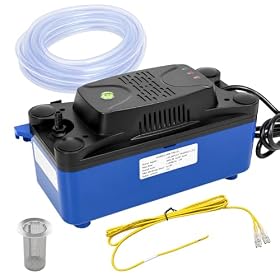
A separate condensate pump can also work with a gravity-drain dehumidifier. This may be useful if you already own a suitable dehumidifier, but it adds another powered device, another hose connection, and another component that requires maintenance.
3. Capacity appropriate for the space
Choose capacity based on the room or area size and how damp it is. A basement with visible dampness, water intrusion, or frequent condensation generally needs more moisture-removal capacity than a similarly sized dry room.
Manufacturers commonly describe capacity using pints removed per day. Compare units using the same rating conditions when possible, because test conditions affect the published number. A larger nominal capacity can be helpful in a very damp space, but it does not fix leaks, flooding, or inadequate drainage.
For an open basement or several connected rooms, consider the total area and airflow between spaces. A dehumidifier in one closed room will not effectively dry areas it cannot exchange air with.
4. Automatic restart and overflow protection
For unattended operation, look for features such as automatic restart after a power interruption, a full-bucket shutoff, and a clear drain setup. Automatic restart is particularly useful in basements or other spaces where you may not notice a brief outage.
Continuous drainage reduces bucket emptying, but it does not eliminate the need for overflow protection. A hose can disconnect, clog, freeze, or drain into an obstructed opening. Keep the unit level and route the hose where a leak can be noticed safely.
Gravity drain vs. built-in pump
Setup
Best for
Main limitation
Gravity drain
Floor drains and nearby low-level drains
Requires a continuous downhill hose route
Built-in pump
Sinks, standpipes, or drains above the unit
Adds pump noise and another part that can fail
Separate condensate pump
Existing units or unusual drain layouts
Requires extra installation space and power
Bucket only
Occasional use or locations without a drain
Requires regular emptying and does not provide unattended drainage
Product prices and availability are accurate as of the date/time indicated and are subject to change. Any price and availability information displayed on Amazon.com at the time of purchase will apply to the purchase of this product.
How to set up continuous drainage
Read the manual first. Confirm that continuous drainage is supported and identify the correct outlet and hose type.
Place the dehumidifier on a stable, level surface. Do not raise it on an improvised or unstable platform to create a gravity drain.
Install the hose at the specified connection. Make sure the fitting is fully seated and sealed without overtightening plastic parts.
Route the hose with minimal bends. For gravity drainage, the entire route should slope downward. Avoid low loops where water can collect.
Secure the discharge end. Prevent the hose from moving out of the drain or splashing onto the floor.
Test the setup while present. Run the unit long enough to confirm that water is flowing and that every connection remains dry.
Inspect it periodically. Check for kinks, algae or debris, loose fittings, and drain backup.
Keep electrical connections away from water. Follow the manufacturer's instructions for outlet requirements and use a qualified electrician if the installation involves new wiring, a dedicated circuit, or a damp-location electrical concern.
Product prices and availability are accurate as of the date/time indicated and are subject to change. Any price and availability information displayed on Amazon.com at the time of purchase will apply to the purchase of this product.
When a built-in pump is worth choosing
A built-in pump is useful when a gravity hose cannot reach the drain while sloping downward. It can also simplify a basement installation when the only practical discharge point is higher than the dehumidifier.
Before choosing one, verify:
Maximum vertical lift
Maximum recommended hose length, if stated
Pump outlet size and included accessories
Whether the pump operates automatically
Whether the unit can still drain by gravity if the pump is not needed
How the pump and reservoir are cleaned or serviced
Do not select a pump only because the listing mentions “continuous drain.” That phrase may describe gravity drainage rather than powered water removal.
Product prices and availability are accurate as of the date/time indicated and are subject to change. Any price and availability information displayed on Amazon.com at the time of purchase will apply to the purchase of this product.
Common continuous-drain problems
Water is still collecting in the bucket
Confirm that the unit is configured for continuous drainage and that the hose is connected to the correct outlet. Check for a blocked hose, an upward section in the route, a loose adapter, or a drain opening that is higher than the outlet. Some units may still retain a small amount of water or use the bucket for overflow protection, so consult the manual before assuming the setup is defective.
The hose is connected but no water comes out
The room may not yet have produced enough condensate, especially if humidity is low. If the dehumidifier is collecting water, inspect the hose for a kink or blockage and verify that it slopes downward. For a pump model, check the pump setting and discharge height. Never open electrical covers or bypass safety switches while troubleshooting.
The pump runs but water does not reach the drain
Check the vertical lift, hose routing, and discharge point. A hose that is too long, too narrow, kinked, or partially blocked can restrict flow. A stuck check valve or clogged pump reservoir may also be responsible. Follow the cleaning procedure in the manual; replace the pump or call for service if it cannot move water after basic checks.
The dehumidifier stops unexpectedly
Check whether the bucket is full, the drain is blocked, the air filter is clogged, or the unit has reached its target humidity. Also verify that the power cord and outlet are secure. If a breaker trips repeatedly, the cord or unit becomes unusually hot, or there is a burning odor, unplug it if safe and have the electrical issue evaluated by a qualified professional.
When to buy a separate drain hose or pump
A replacement hose is reasonable when the original hose is damaged, too short, or incompatible with the intended drain route. Match the manufacturer's required diameter and connection style rather than choosing by appearance alone.
A separate condensate pump makes sense when the dehumidifier supports a drain outlet but the destination is higher than the unit. Choose a pump rated for condensate and sized for the required lift. Install it where leaks can be seen and serviced.
If the dehumidifier is old, repeatedly trips protection, leaks from the cabinet, or has a failing compressor or control board, replacing the entire unit may be more practical than adding drainage accessories. A new pump or hose will not correct a sealed-system or major electrical failure.
FAQ
Can every dehumidifier use a continuous drain hose?
No. Some models are designed only for bucket collection. Confirm in the manual that the unit supports continuous drainage and check the required hose connection before buying accessories.
Do I need a dehumidifier with a pump?
You need a pump when water must travel upward to reach the discharge point. If the hose can run continuously downhill to a floor drain or other low drain, gravity drainage is usually sufficient.
Why does my continuous-drain dehumidifier keep filling the bucket?
The hose may be blocked, kinked, disconnected, or routed uphill. The unit may also be set up at the wrong outlet, or its bucket may be serving as overflow protection. Check the manual and inspect the complete hose route.
Can I use any garden hose for dehumidifier drainage?
Not necessarily. The hose must match the required inside diameter, fitting, and routing requirements. An incorrect hose may leak or restrict drainage, so use the specified hose or a confirmed compatible replacement.
How often should I clean a dehumidifier drain hose?
Inspect it regularly and clean it whenever flow slows, buildup is visible, or the unit begins filling the bucket. The manual may specify a cleaning method for the hose, drain outlet, filter, and pump reservoir.