Dehumidifier with a Pump for a Basement Without a Floor Drain
A dehumidifier with an integrated condensate pump can drain basement moisture into a sink, utility tub, standpipe, or other higher location when there is no floor drain. The key specifications are pump lift, hose connection, reservoir capacity, basement size rating, and continuous-drain setup.
A dehumidifier with a pump is the practical choice for a basement without a floor drain because it can move collected water upward to a sink, utility tub, standpipe, or nearby drain. Look for an integrated condensate pump with enough vertical lift for your setup, a continuous-drain hose connection, automatic restart, and a capacity appropriate for the basement’s size and dampness.
How a pump-equipped dehumidifier works
A dehumidifier removes moisture from the air and collects it as condensate. A standard unit usually relies on gravity: water flows through a hose only when the drain opening is lower than the appliance.
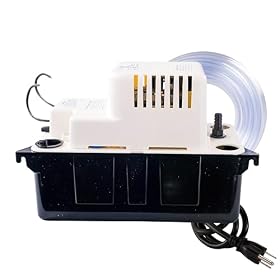
A pump-equipped model adds a small condensate pump. When the internal reservoir fills, the pump sends water through tubing to a higher discharge point. This allows drainage to:
A laundry sink or utility sink
A basement bathroom sink
A standpipe or washing-machine drain
A nearby floor drain that is higher than the dehumidifier
A sump basin, if the hose is routed and secured correctly
The pump does not eliminate the need for a drain path. You still need a compatible hose, a reachable discharge point, and a route that does not kink or allow water to flow backward.
Specifications that matter most
Pump lift height
Pump lift is the maximum vertical distance the pump can move water, usually measured from the dehumidifier to the discharge point. Measure the height difference between the unit’s hose outlet and where the water will enter the drain. Then account for any extra height caused by routing the hose over a doorway, shelf, or wall obstruction.
Do not choose a unit whose published maximum lift barely matches your measurement. Pump performance can decrease with longer hose runs, bends, and restrictions. Leave a margin whenever possible, and follow the manufacturer’s stated lift limit.
Continuous-drain connection
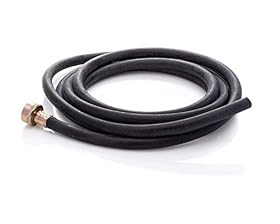
The dehumidifier should have a dedicated continuous-drain outlet or pump-drain connection. Some models include a hose adapter, while others require a separately sized hose or connector.
Check the instructions before buying replacement tubing. A hose that fits loosely can leak, while an overly large or incompatible hose may not seal correctly.
Dehumidification capacity
Capacity is commonly listed in pints of moisture removed per day. The correct size depends on the basement’s square footage, humidity level, temperature, and whether the space is mildly damp or persistently wet.
As a practical starting point:
A small, mildly damp basement may need a lower-capacity unit.
A large, very damp, or frequently wet basement generally needs a higher-capacity unit.
A basement with visible condensation, musty odors, or water intrusion may need more capacity and moisture repairs, not just a larger appliance.
Oversizing is not always a problem, but a unit that is far too large may cycle differently and provide less consistent humidity control. Use the manufacturer’s sizing chart and consider the coldest operating temperature in the space.
Operating temperature
Basements can be cool enough to cause frost buildup on some dehumidifiers. Check the unit’s minimum operating temperature and whether it has automatic defrost. If the basement regularly becomes cold, choose a model designed for low-temperature operation or address the temperature and insulation conditions.
Automatic restart
Automatic restart is useful if the basement experiences a power interruption. A unit with this feature can resume its previous settings when power returns, although the pump and drainage system should still be checked after an outage.
Hose length and routing
The supplied hose may not be long enough for your drain location. Before installation, measure the full route rather than just the straight-line distance. Avoid sharp bends, crushed sections, and places where the hose can be stepped on.
Product prices and availability are accurate as of the date/time indicated and are subject to change. Any price and availability information displayed on Amazon.com at the time of purchase will apply to the purchase of this product.
How to set it up without a floor drain
Choose a stable location. Place the dehumidifier on a level, solid surface with the clearances specified in the manual. Keep it away from walls, stored items, and anything that could block airflow.
Identify the correct pump outlet. A pump-equipped unit may have separate openings for gravity drainage and pumped drainage. Use the outlet identified for the pump.
Connect the hose securely. Push the hose fully onto the fitting and use any supplied clamp, adapter, or retaining clip.
Route the hose upward and toward the drain. Keep the path as short and direct as practical. Do not exceed the listed lift height.
Secure the discharge end. Fasten the hose so it cannot whip out of a sink or standpipe when the pump starts. Keep the outlet above the receiving water level where appropriate to reduce the chance of backflow.
Set the humidity target. A target around 45% to 55% relative humidity is a common starting range for a basement, but the best setting depends on comfort, condensation, and the condition of the space.
Test the drainage. Run the unit and confirm that water reaches the intended drain without leaking, pooling, or backing up.
Follow the appliance manual if its hose route, fittings, or test procedure differs from these general steps.
Product prices and availability are accurate as of the date/time indicated and are subject to change. Any price and availability information displayed on Amazon.com at the time of purchase will apply to the purchase of this product.
Integrated pump or external condensate pump?
An integrated pump keeps the drainage system compact and avoids adding a separate pump beside the dehumidifier. It is usually the simplest choice when buying a new unit and when the required lift is within the built-in pump’s rating.
You already own a dehumidifier with a gravity-drain outlet.
The discharge point is higher than the built-in pump can reach.
You need a larger pump reservoir or a different installation arrangement.
The dehumidifier’s pump has failed but the appliance itself is still in good condition.
An external pump adds another electrical device, hose connection, and failure point. It must be installed according to its instructions, placed where leaks can be detected, and connected to a properly grounded outlet. If water could reach electrical equipment or outlets, stop and have the arrangement evaluated by a qualified professional.
Common setup problems
The pump runs but no water reaches the drain
Check that the hose is connected to the pump outlet rather than the gravity-drain outlet. Look for a kink, crushed section, blockage, or discharge point above the pump’s lift rating. Also check whether the hose end is submerged or sealed tightly into a drain, which can restrict flow in some setups.
The dehumidifier shuts off with a full-tank warning
The unit may not detect the pump hose correctly, or the pump may not be operating. Inspect the connection, confirm that the pump feature is enabled if the model requires it, and clean the filter. A blocked intake filter can also reduce normal operation and cause unusual cycling.
If the internal reservoir fills even though the pump runs, disconnect power before inspecting the hose or pump area. Do not reach into moving or energized components.
Water leaks around the hose connection
Turn the unit off, unplug it, and check the adapter and hose size. Replace a split hose or damaged gasket rather than relying on tape as a permanent repair. Make sure the hose is not pulling sideways on the fitting.
The pump runs frequently
Frequent pumping can be normal in a very damp basement. It can also indicate an undersized unit, a low humidity setting, open basement windows, plumbing leaks, foundation seepage, or a hose that drains poorly. Address obvious moisture sources instead of relying only on continuous dehumidification.
The basement remains damp
Confirm that the humidity reading is accurate, the filter is clean, and air can circulate around the unit. Check that doors and windows are closed when outdoor air is humid. If the unit runs continuously without lowering humidity, the basement may be too large or wet for the appliance, or moisture may be entering through leaks, seepage, or inadequate drainage.
When to replace the pump or the dehumidifier
A replacement hose or connector is reasonable when the unit works normally but the existing tubing is cracked, kinked, too short, or incompatible with the installation.
An external condensate pump may be worthwhile when the dehumidifier is otherwise reliable and the only problem is insufficient lift or a failed built-in pump. Replace the entire dehumidifier when it has repeated electrical faults, refrigerant-system problems, severe corrosion, or a failed pump on an older unit whose repair cost is difficult to justify.
Before purchasing a replacement, verify the drain outlet, hose size, pump lift, operating temperature range, and required electrical specifications in the manufacturer’s documentation.
FAQ
Can a dehumidifier pump water into a sink?
Yes. A pump-equipped dehumidifier can usually discharge into a sink or utility tub if the hose is secured and the vertical lift and hose length stay within the manufacturer’s limits.
How high can a dehumidifier pump water?
The limit varies by model. Check the published maximum lift, measure from the dehumidifier’s hose outlet to the discharge point, and leave additional margin for hose bends and restrictions.
Does a basement dehumidifier need a floor drain?
No. A unit can use its internal bucket, a gravity drain to a lower location, an integrated condensate pump, or an external pump. For unattended operation without a floor drain, a pump and continuous-drain hose are usually the most convenient arrangement.
Can I add a pump to a dehumidifier that does not have one?
Often, yes, with a compatible external condensate pump. Confirm that the dehumidifier has a suitable drain outlet and install the pump according to its instructions. The added pump must be protected from leaks and connected safely.