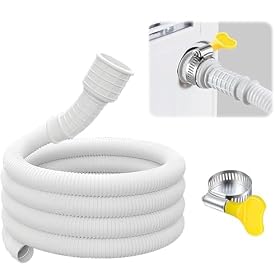
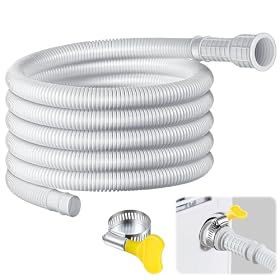
A spare hose and clamp kit can keep a dehumidifier’s continuous drain working, but compatibility matters. Check the drain outlet, hose diameter, length, material, and clamp style before buying.
Buying a spare hose and clamp kit
A spare hose and clamp kit is useful when a dehumidifier’s drain hose cracks, leaks, gets lost during storage, or needs to be rerouted. The safest way to buy one is to match the hose to the dehumidifier’s drain outlet—not simply to choose a hose that looks similar.
What to check before buying
1. Identify the drain connection
Turn off and unplug the dehumidifier, then inspect the continuous-drain outlet. Some units accept a hose directly over a small outlet or barb, while others use a threaded adapter, supplied connector, or proprietary fitting.
Check:
The dehumidifier’s owner’s manual for the required hose size and connection type
Whether the outlet is threaded, barbed, smooth, or designed for a specific adapter
Whether the original hose used an adapter that must be reused
The inside diameter (ID) and outside diameter (OD) of the original hose, if available
Do not force a hose over a connection that is too small or stretch a hose until it splits. If the unit requires a special connector, a generic hose-and-clamp kit may not be enough.
2. Measure the hose correctly
The most important hose measurement is usually its inside diameter, because the hose must fit over the drain outlet or adapter. Measure the outlet’s outside diameter as well, but do not assume that a nominal hose size will fit every dehumidifier.
If you still have the old hose, measure its opening with a ruler or caliper. If it is stretched, flattened, or damaged, use the dehumidifier manual and the outlet dimensions instead. A hose that is slightly too loose may leak even when a clamp is tightened.
3. Choose the right length
The hose should reach the drain without pulling sharply on the dehumidifier connection. However, extra length can create low spots where water collects and may increase the chance of kinks or blockages.
Choose a length that allows:
A continuous downward path to the drain
Gentle bends rather than tight turns
Enough slack to move the dehumidifier for cleaning
No loops, pinched sections, or unsupported sagging
For a gravity drain, the hose outlet must remain lower than the dehumidifier’s drain connection. A hose that runs uphill or ends in standing water may prevent drainage, even if the connection does not leak.
4. Select a suitable hose material
A flexible clear or translucent drain hose makes it easier to see water, algae, sediment, and blockages. The material should be rated for the intended drainage use and remain flexible in the room where the dehumidifier operates.
Avoid choosing solely by appearance. Important characteristics include:
Resistance to kinking
Flexibility without collapsing
Compatibility with the drain connection
Resistance to cracking over time
A smooth enough interior to reduce buildup
Do not use a hose that has been exposed to chemicals, heat, sunlight, or freezing conditions if it has become brittle or distorted.
Choosing the clamp
A clamp should hold the hose securely against the outlet without cutting into the hose or deforming the plastic fitting.
Worm-drive clamps
A small stainless-steel worm-drive clamp is adjustable and commonly used when its size range matches the hose and outlet. Tighten it only enough to stop movement and leaks. Excessive tightening can split a soft hose or damage a plastic drain outlet.
Spring clamps
Spring clamps provide constant pressure and can work well when the clamp is correctly sized. They may be harder to remove in a confined space, and their pressure may not suit every hose material or fitting.
One-time or specialty clamps
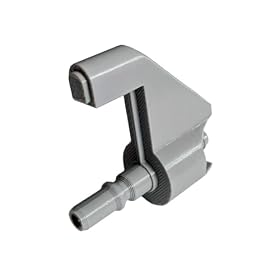
Some kits include clamps intended for a particular connector or hose assembly. Follow the dehumidifier manufacturer’s instructions if the original connection uses a specialty clamp. Do not replace a required fitting with a generic clamp if the connection depends on threads, an O-ring, or a molded adapter.
Replacement hose for continuous dehumidifier drainage
Product prices and availability are accurate as of the date/time indicated and are subject to change. Any price and availability information displayed on Amazon.com at the time of purchase will apply to the purchase of this product.
What a useful spare kit should include
A practical kit may include:
A hose with the correct inside diameter
Enough length for the planned drain route
At least one compatible clamp
Any required adapter, washer, or sealing ring
Instructions for the relevant connection type
A kit with several clamps is not automatically better. The clamp still needs to fit the hose and provide even pressure around the connection. If you are replacing a lost adapter, look for a kit specifically compatible with the dehumidifier’s drain outlet rather than buying hose alone.
Product prices and availability are accurate as of the date/time indicated and are subject to change. Any price and availability information displayed on Amazon.com at the time of purchase will apply to the purchase of this product.
Installation and leak check
Unplug the dehumidifier before working on the drain connection.
Clean the outlet and remove pieces of the old hose or clamp.
Push the new hose fully onto the outlet or adapter without twisting it sharply.
Position the clamp over the connection area, not at the very end of the hose.
Tighten the clamp gently until the hose cannot be pulled off by hand.
Route the hose downhill to an appropriate drain or collection point.
Make sure the hose is not kinked, crushed, or submerged at the outlet.
Run the dehumidifier and inspect the connection for leaks.
If the unit has a built-in condensate pump, follow the pump and dehumidifier instructions instead of assuming the hose can drain by gravity. A pump discharge hose may have different routing requirements from a standard continuous-drain hose.
Product prices and availability are accurate as of the date/time indicated and are subject to change. Any price and availability information displayed on Amazon.com at the time of purchase will apply to the purchase of this product.
Common buying mistakes
Buying by hose length alone
A long hose that does not fit the outlet is unusable. Confirm the connection and diameter first, then select the shortest practical length.
Assuming all dehumidifiers use the same drain hose
Drain outlets vary. Some models use a simple hose connection, while others require an adapter or threaded fitting. Check the manual or compare the replacement part with the original assembly.
Using tape instead of a proper connection
Thread-sealing tape may help on compatible threaded fittings, but it will not reliably fix a loose hose-over-barb connection. A hose with the correct dimensions and a suitable clamp is the better solution. Use sealing materials only where the manufacturer specifies them.
Creating a low spot in the hose
A sagging section can retain water and restrict flow. Support or reroute the hose so it maintains a steady downward path.
When to buy a replacement hose or a full fitting assembly
Buy a replacement hose when the original is cracked, hardened, kinked, stained with buildup, or too short for the new drain route. Replace the clamp if it is corroded, stripped, or unable to hold even pressure.
A complete fitting assembly is more appropriate when the dehumidifier’s adapter, washer, threaded connector, or drain outlet is damaged. If the plastic outlet on the unit is cracked or leaking at its base, stop using the drain connection and consult the manufacturer or a qualified appliance technician. A hose and clamp cannot repair a damaged appliance outlet.
For an occasional backup, store the spare hose flat or in a wide coil, away from sharp bends and freezing temperatures. Keep any adapter or clamp with it so the replacement is ready when needed.
FAQ
How do I know what size drain hose my dehumidifier needs?
Check the owner’s manual for the required hose size and connection type. If the manual is unavailable, measure the dehumidifier outlet and the inside diameter of the original hose. Also check whether the unit requires a special adapter.
Does a dehumidifier drain hose need a clamp?
A clamp is useful when the hose fits over a smooth or barbed outlet and could loosen or leak. Use a correctly sized clamp and tighten it only enough to secure the hose without cutting into it or damaging a plastic fitting.
Can I use any clear hose for continuous dehumidifier drainage?
No. The hose must have the correct inside diameter, remain flexible without kinking, and match the dehumidifier’s connection. Some units also require a specific adapter or fitting.
Why is water still collecting in the dehumidifier after installing a drain hose?
Check that the hose is fully attached, free of clogs and kinks, and routed continuously downhill for gravity drainage. Confirm that the unit is configured for continuous drain and that the hose outlet is not submerged. A pump-equipped unit may require different routing.