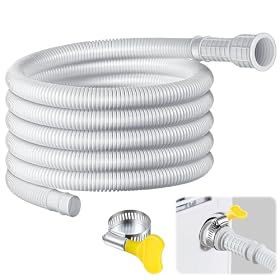
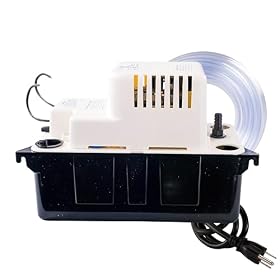
A dehumidifier drain hose that kinks under a door can stop continuous draining and cause water to back up. Here’s how to reroute it safely and when to use a different hose or condensate pump.
Drain hose kinking under a door
A dehumidifier drain hose kinking under a door usually means the hose is being compressed by the door, routed at too sharp an angle, or made from tubing that is too soft for the opening. The restriction can slow or stop drainage, causing the dehumidifier’s bucket to fill even when continuous drainage is connected.
The simplest fix is to reroute the hose so it does not pass through the door gap. If that is not possible, use a more suitable route, a low-profile door pass-through, or a condensate pump that lets you discharge water through a different path.
Why the hose kinks under a door
Common causes include:
The door is pressing directly on the tubing. A closed door can flatten soft vinyl or plastic hose.
The hose bends too sharply. Tight turns near the dehumidifier outlet can restrict flow.
The hose is too long or unsupported. Extra tubing can sag, fold, or form low spots.
The hose diameter does not match the drain outlet. An improvised or loose connection may collapse when routed through a narrow gap.
The hose is routed uphill. Most gravity drains need a continuous downward path from the dehumidifier to the drain.
The door gap is too narrow. Even a hose that looks only slightly compressed may have very little usable flow area.
Fix the hose routing first
Unplug the dehumidifier before changing the drain connection. Keep water away from the plug, outlet, and electrical connections.
Open the door and inspect the entire hose. Look for flattened sections, sharp bends, pinched spots, cracks, and loose connections.
Remove the hose from under the door if possible. Route it through an open doorway, along a wall, or through another path that does not compress the tubing.
Create a gradual bend at the dehumidifier. Avoid folding the hose immediately at the drain outlet.
Keep the hose continuously downhill. A gravity drain may stop working if the tubing rises, loops upward, or dips and then climbs again.
Secure the hose loosely. Use clips or supports to prevent it from moving, but do not crush it with tight zip ties or clamps.
Reconnect the hose and check for leaks. The connection should be snug and aligned with the drain outlet. Follow the dehumidifier manufacturer’s instructions for any included adapter or clamp.
Pour a small amount of water into the drain path if the design allows it, or run the dehumidifier while observing the hose. Confirm that water reaches the drain without backing up.
Product prices and availability are accurate as of the date/time indicated and are subject to change. Any price and availability information displayed on Amazon.com at the time of purchase will apply to the purchase of this product.
If the hose must pass through the doorway
Passing a drain hose beneath a door is generally less reliable than routing it around the door. If it is unavoidable:
Use the largest door clearance that does not crush the hose.
Keep the tubing near the hinge side only if that provides more consistent clearance; check that opening and closing the door does not pinch it.
Do not shave, drill, or modify a door, threshold, or fire-rated assembly without permission and appropriate guidance.
Consider a purpose-made low-profile pass-through rather than forcing ordinary tubing through a narrow gap.
Check the hose after the door has been closed. A route that works with the door open may fail when the door is shut.
Do not leave the hose where it creates a trip hazard or prevents the door from closing properly. A different route is usually safer and more dependable.
Product prices and availability are accurate as of the date/time indicated and are subject to change. Any price and availability information displayed on Amazon.com at the time of purchase will apply to the purchase of this product.
Check for blockage and poor drainage
A kink may not be the only restriction. After rerouting the hose, inspect for:
Dirt or slime inside the hose
A plugged drain outlet or hose adapter
A collapsed section that remains flattened after the kink is removed
A hose end submerged in standing water
A drain opening that is too small or obstructed
Water collecting in a low spot before the final drain
Disconnect the hose and flush it with clean water if the manufacturer permits this. Replace tubing that is brittle, permanently flattened, split, or difficult to clean.
When gravity drainage is not practical
If the dehumidifier sits below the available drain, the hose must cross a threshold, or the route cannot maintain a downward slope, a gravity hose may not be the right setup. A compatible condensate pump can move water upward or through a longer route, but it must be sized and connected according to the dehumidifier and pump manufacturers’ instructions.
A pump adds another component that can clog or fail, so provide an accessible location and check it periodically. Some dehumidifiers also have a built-in pump function or require a specific pump connection; confirm compatibility before buying a replacement part.
When to replace the hose or change the setup
Replace the hose when it stays flattened, leaks, feels brittle, or cannot hold a smooth bend. Choose tubing with the correct inside diameter and connection style for the dehumidifier’s drain outlet. A larger hose is not automatically better if it does not fit the outlet securely.
Change to a different drainage method when:
The only route requires crushing the hose under a door
The destination drain is higher than the dehumidifier’s outlet
The hose repeatedly forms low spots or backs up
The bucket fills despite a clear, correctly routed hose
The installation creates a trip, water-damage, or electrical hazard
If the hose is clear and correctly sloped but the dehumidifier still will not drain, inspect the drain outlet, float or bucket sensor, and any pump system according to the manual. Stop using the unit and seek qualified service if water reaches electrical components, the cord or outlet is damaged, or the unit shows signs of an electrical fault.
FAQ
Can I run a dehumidifier drain hose under a door?
You can, but the door may flatten the hose enough to stop drainage. Routing the hose around the door is more reliable. If it must pass underneath, verify that the door does not compress or damage the tubing when closed.
Why does my dehumidifier bucket fill even though the drain hose is connected?
A kink, blockage, uphill section, loose connection, incorrect hose size, or failed condensate pump can stop continuous drainage. Check the hose from the dehumidifier to the drain and confirm that water has a continuous path.
Does a dehumidifier drain hose need to slope downward?
A gravity drain normally needs a continuous downward slope from the dehumidifier to the drain. If the route rises or includes a low spot followed by an uphill section, water may stop flowing.
Should I use a condensate pump instead of a drain hose?
Use a compatible condensate pump when gravity drainage is impossible, such as when the drain is higher than the dehumidifier or the route must cross a threshold. Follow both manufacturers’ installation instructions and keep the pump accessible for maintenance.