
A pump-equipped dehumidifier usually costs more upfront, while adding a separate condensate pump can be the lower-cost option if you already own a working dehumidifier. The better value depends on the unit’s remaining life, the drain distance and lift height, installation requirements, and whether you prefer an integrated system or replaceable components.
Price & Buying · Mon Sep 07
Cost of a pump-equipped dehumidifier versus adding a condensate pump
A dehumidifier with a built-in pump is simpler, but adding a condensate pump can cost less when you already own a suitable unit. Compare equipment, installation, maintenance, and replacement costs before deciding.
What each option includes
Pump-equipped dehumidifier
A pump-equipped dehumidifier has a condensate pump built into the appliance. It collects water produced during dehumidification and sends it through a hose to a suitable drain or elevated discharge point.
The upfront cost includes:
- The dehumidifier
- The integrated pump
- A pump outlet or drain connection
- Any included hose or hose fitting
You may still need a longer drain hose, a nearby electrical outlet, or a suitable discharge location. The built-in pump does not eliminate the need to follow the manufacturer’s limits for hose length, lift height, and drainage.
Existing dehumidifier plus an external condensate pump
With this setup, the dehumidifier drains into a separate pump reservoir. When the reservoir fills, the pump sends water through tubing to a drain, sink, standpipe, or other approved discharge point.
The total cost includes:
- The external condensate pump
- Discharge tubing or a drain hose
- A connection method between the dehumidifier and pump reservoir
- Possible fittings, clamps, or a check valve if specified by the pump manufacturer
- Installation time or professional labor, if needed
This option lets you keep a working dehumidifier, and the pump can usually be replaced separately if it fails.
External drainage option
 Gasbye Energy Star 2026 Dehumidifier with [𝗥𝗲𝗽𝗹𝗮𝗰𝗲𝗮𝗯𝗹𝗲 Pump] for Basement – [44dB Quiet, Easy to…Gasbye
$299.99 as of
View on Amazon Upgraded Automatic Condensate Pump for Dehumidifier, 15 FT Vertical High Lift, IPX8 Waterproof Submersible Mini…PmpDrTech
$39.99 as of
View on Amazon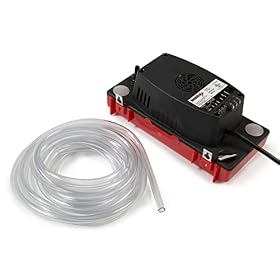 AprilAire 4856 Low Profile 120V Dehumidifier Condensate Pump for AprilAire Crawl Space, Basement, Whole-House Dehumidifier…Aprilaire
$119.40 as of
View on Amazon
Product prices and availability are accurate as of the date/time indicated and are subject to change. Any price and availability information displayed on Amazon.com at the time of purchase will apply to the purchase of this product.
Which option costs less?
If you already own a working dehumidifier
Adding an external condensate pump is often the more economical choice. You are buying only the drainage equipment instead of replacing the entire appliance. This is especially practical when the dehumidifier still removes moisture effectively, operates normally, and has no major leaks or compressor problems.
Check the dehumidifier’s drain design before buying a pump. Some units drain through a hose connection, while others may require the collection bucket to remain in place. A pump must receive water reliably without allowing the dehumidifier to overflow.
If you need to buy a new dehumidifier
A pump-equipped model may offer better convenience and a cleaner installation because the pump is designed to work with that appliance. Compare the complete setup rather than the appliance price alone. A lower-priced dehumidifier plus a separate pump may not remain cheaper after adding tubing, fittings, and installation.
An integrated pump also reduces compatibility questions. However, if the built-in pump fails outside the warranty period, repair may be less convenient than replacing a separate external pump.
If the dehumidifier is near a floor drain
You may not need a pump at all. A gravity drain can be the least expensive and simplest solution when the dehumidifier can sit high enough for continuous downward flow and the hose can reach the drain without sharp bends or low spots.
Do not raise a dehumidifier in an unstable position just to create a gravity drain. Use a stable, level setup that follows the manufacturer’s instructions.
Replacement discharge tubing
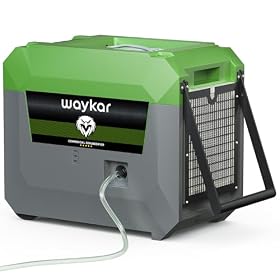 Waykar 150 Pints Commercial Dehumidifier with Pump & Drain Hose, 7,500 Sq. Ft LGR Industrial…Waykar
$559.99 as of
View on Amazon
Product prices and availability are accurate as of the date/time indicated and are subject to change. Any price and availability information displayed on Amazon.com at the time of purchase will apply to the purchase of this product.
Costs beyond the purchase price
Drain hose and fittings
Both options may require a hose. Verify the required inner diameter, connection type, and maximum recommended length. A hose that fits loosely can leak, while a hose that is too narrow or long can restrict flow.
External pump installations may also need tubing, adapters, clamps, or a check valve. Use only parts approved or recommended by the pump and dehumidifier manufacturers.
Installation
A pump-equipped dehumidifier is generally quicker to set up, but it still needs a safe discharge route. An external pump may take more time because you must position the reservoir, route the discharge line, and test the float or shutoff operation.
If the installation involves modifying plumbing, routing water near electrical equipment, or connecting to a permanent drain, consult the applicable instructions and consider a qualified professional. Keep power connections dry and use a properly grounded outlet with appropriate ground-fault protection where required by local code.
Electricity
Either arrangement uses electricity for the dehumidifier and pump. A separate pump may run only when its reservoir fills, while an integrated pump follows the appliance’s control system. The difference in electricity use is usually less important than correct sizing, drainage reliability, and avoiding repeated overflow events.
Maintenance and failure costs
A built-in pump means fewer separate components to position, but a pump failure can make the dehumidifier’s automatic drainage unavailable until the appliance is repaired. With an external pump, the pump is easier to isolate and replace, but there is another reservoir, hose connection, and power cord to maintain.
For either setup:
- Clean the dehumidifier’s air filter as directed.
- Inspect the drain hose for kinks, algae, mineral buildup, and loose connections.
- Keep the pump reservoir and intake area clean.
- Test the high-water shutoff periodically.
- Watch for leaks after moving the equipment or changing the hose route.
A practical break-even decision
Choose a pump-equipped dehumidifier when:
- You need a new dehumidifier anyway.
- You want the simplest installation.
- The unit will run unattended in a basement or other damp space.
- You prefer one appliance with a single warranty and control system.
- The manufacturer provides clear pump performance and drainage specifications.
Choose an external condensate pump when:
- You already own a reliable dehumidifier.
- The unit has a compatible continuous-drain outlet.
- You want to replace the pump independently later.
- The dehumidifier’s built-in bucket or gravity drain is inconvenient, but the appliance itself still has useful service life.
- You need a particular discharge route or lift arrangement that an external pump can support.
Choose a gravity drain instead when the drain is close, lower than the outlet, and accessible without an unstable setup. This avoids pump purchase, pump noise, and pump failure, but the hose must maintain a dependable downward path.
Check these specifications before buying
The most important specifications are not just moisture-removal capacity. Confirm:
- Maximum lift height: The vertical distance from the pump to the discharge point. Measure the actual rise, not just the horizontal hose length.
- Discharge distance and tubing size: Follow the manufacturer’s limits for hose diameter and total routing distance.
- Continuous-drain compatibility: Confirm how water exits the dehumidifier and whether the bucket must remain installed.
- Automatic shutoff: A pump or dehumidifier should stop or signal a problem if water cannot be discharged.
- Reservoir capacity: A larger reservoir may reduce cycling, but it does not replace a functioning float or shutoff.
- Noise and placement: Pumps can make an audible cycling sound and need a level, accessible location.
- Warranty and replacement access: Check whether the pump is serviceable or treated as part of the complete appliance.
Bottom line
If you are replacing the dehumidifier, compare a pump-equipped model with the full installed cost of a standard model plus an external pump and hose. If your current dehumidifier works well, adding a compatible condensate pump is commonly the more economical path. A gravity drain remains the lowest-complexity option when the layout allows it safely.
Do not choose based on purchase price alone. A reliable shutoff, correct lift capacity, compatible hose connections, and a drain route that will not leak are more important than a small difference in equipment cost.
FAQ
Is a dehumidifier with a built-in pump worth the extra cost?
It can be worth it when you need a new dehumidifier and want a simpler installation with fewer compatibility questions. If you already own a reliable unit, adding a compatible external condensate pump may cost less than replacing the appliance.
Can I add a condensate pump to any dehumidifier?
No. The dehumidifier must provide a reliable way to drain into the pump reservoir or have a compatible continuous-drain connection. Check both manufacturers’ instructions before buying, and make sure the pump can handle the required lift and hose routing.
Is a gravity drain cheaper than using a condensate pump?
Usually, because it does not require a pump or pump electricity. It works only when the hose can run continuously downhill to a suitable drain and the dehumidifier can remain level and safely positioned.
What is the most important condensate pump specification?
Confirm the maximum lift height first, then check tubing size, total discharge distance, automatic shutoff, and compatibility with the dehumidifier’s drain outlet. The pump must exceed the actual vertical rise in your installation.
Should I replace the dehumidifier or add a pump?
Add a pump when the existing dehumidifier removes moisture normally, has no serious leaks or electrical faults, and supports continuous drainage. Replace the unit when it has major performance problems, repeated leaks, compressor or control failures, or is otherwise near the end of its useful service life.