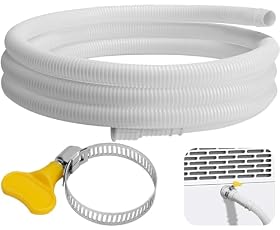
An internal pump is the better choice when condensate must travel uphill or across a room. Gravity drainage is simpler, quieter, and usually more reliable when a floor drain or other low outlet is nearby.
An internal pump is useful when a dehumidifier must move water uphill or across a room. Gravity drainage is usually the simpler choice when the unit can sit above a suitable floor drain or drain outlet. The right setup depends mainly on elevation, hose routing, reliability, and how much maintenance you want to handle.
Internal pump versus gravity drain at a glance
Consideration
Internal pump
Gravity drain
Best for
Remote drains, sinks, standpipes, or uphill discharge points
Nearby floor drains or low-level outlets
Installation
More involved
Usually straightforward
Power use
Requires the dehumidifier and pump to operate
Does not need a separate pumping action
Noise
May add pump noise
Typically quieter
Maintenance
Pump and hose need occasional inspection
Hose and drain path need inspection
Main failure risk
Pump failure, blocked check valve, or power interruption
Poor slope, kinks, clogs, or a loose connection
Elevation capability
Limited by the manufacturer's maximum lift
No uphill drainage
Choose gravity drainage when the outlet is lower
A gravity drain is often the best option if the dehumidifier can sit high enough for the hose to run continuously downhill to a floor drain, condensate line, or suitable drain opening.
The hose must maintain a steady downward slope. Avoid loops, low spots where water can collect, sharp bends, and sections that rise before dropping. Even a small uphill section can stop or slow the flow.
Gravity drainage is a good fit when:
A floor drain is close to the dehumidifier.
The dehumidifier can be placed on a stable platform at the required height.
The hose can reach the outlet without kinks.
You want the fewest mechanical parts.
A quiet setup is important.
Important gravity-drain checks
Confirm that the dehumidifier has a continuous-drain outlet and that the drain connection is intended for a hose. Use the hose size and adapter specified by the manufacturer. Secure the connection so it cannot loosen, but do not overtighten plastic fittings.
The platform must be stable, level enough for safe operation, and strong enough to support the appliance. Do not place a dehumidifier where it could fall, block a walkway, or discharge water onto electrical equipment.
Product prices and availability are accurate as of the date/time indicated and are subject to change. Any price and availability information displayed on Amazon.com at the time of purchase will apply to the purchase of this product.
Choose an internal pump when water must move uphill
An internal condensate pump is more suitable when the drain point is higher than the dehumidifier or too far away for a practical downhill hose run. Depending on the design, the pump may send water to a sink, standpipe, condensate drain, or other approved discharge point.
A pump is generally the better choice when:
The only usable drain is above the dehumidifier.
The hose must cross a room before reaching the outlet.
Raising the dehumidifier would be unsafe or impractical.
You need the unit to discharge into a remote drain.
Check the manufacturer's maximum lift and maximum hose length before choosing this arrangement. Maximum lift is the vertical distance the pump can raise water; it is not necessarily the same as the total length of the hose. Bends, narrow tubing, and long runs can also reduce performance.
Do not assume that every dehumidifier with a drain connection includes an internal pump. Some models use gravity drainage only, while others accept an optional pump accessory. Follow the specific installation instructions for the unit.
Product prices and availability are accurate as of the date/time indicated and are subject to change. Any price and availability information displayed on Amazon.com at the time of purchase will apply to the purchase of this product.
Which option is more reliable?
Gravity drainage has fewer components, so it usually has fewer possible failure points. If the hose has a continuous downhill path and the outlet remains clear, it can operate with little attention.
A pump adds flexibility but also adds a motor, a float or water-level sensor, and sometimes a check valve. These parts can become affected by sediment, algae, or a blocked hose. A pump also cannot discharge during a power outage unless the dehumidifier and pump are connected to a suitable backup power system approved for the equipment.
Neither setup should be left without an overflow plan in a location where a leak could damage finished flooring, stored items, or electrical equipment. Inspect the drain arrangement periodically, especially after moving the dehumidifier or changing the hose route.
Installation considerations that affect the decision
Hose routing
Use a hose that matches the dehumidifier's required connection. Keep it as short and straight as practical, avoid kinks, and secure the discharge end so it cannot pop out of the drain.
For gravity drainage, the entire route should fall toward the outlet. For a pumped drain, keep the hose within the pump's stated lift and routing limits.
Drain outlet
A floor drain, utility sink, standpipe, or condensate drain may be suitable, but the drain must be able to accept the water without backing up. Do not connect to a drain system in a way that violates local plumbing requirements or creates a cross-connection risk.
If the hose empties into a sink, secure it above the basin and away from the edge. If it enters a standpipe or drain opening, follow the manufacturer's required air gap and securing method.
Dehumidifier placement
Place the unit on a hard, level surface with the clearances specified by the manufacturer. A gravity setup may require a raised platform, but the platform should not obstruct air intake, create a tip hazard, or expose the unit to vibration.
Do not raise the appliance on unstable boxes, loose boards, or materials that can absorb water and shift. If the required drain height cannot be achieved safely, use a pump-based setup instead.
Troubleshooting a drain that is not working
Start with the simplest physical causes before assuming the pump or dehumidifier has failed.
Check the hose for kinks or clogs. Disconnect power, remove the hose if the instructions allow it, and inspect both ends. Flush or replace a blocked hose as appropriate.
Check the slope. For gravity drainage, look for any uphill section, sag, loop, or low spot. Re-route the hose so water can flow continuously downhill.
Inspect the connection and seals. Look for a loose adapter, damaged gasket, cracked fitting, or water escaping around the drain port.
Confirm the setup. Make sure the drain plug or internal stopper has been removed only if the manual instructs you to do so, and confirm that the continuous-drain outlet is the correct one.
Check for a full bucket or float interruption. Some units stop dehumidifying when the bucket is full or when the bucket is not seated correctly, even when a hose is attached.
For a pumped system, check the lift and discharge route. Make sure the hose does not exceed the stated height or length limits and that the discharge end is not submerged or blocked.
Inspect the pump area. With power disconnected, check for visible debris or standing water around an accessible pump reservoir. Do not disassemble sealed electrical components unless the manufacturer specifically permits it.
Check power last. If the unit or pump will not run, verify the outlet and reset protection if applicable. Unplug the dehumidifier before inspecting connections, and stop if there is a burning smell, damaged cord, repeated breaker tripping, or evidence of water near electrical parts.
If a gravity hose repeatedly backs up after the route has been corrected, replace a damaged or undersized hose and inspect the drain outlet. If an internal pump no longer activates, continues running without moving water, or leaks after the hose is clear, a manufacturer-approved replacement pump or service may be appropriate. Replacing the dehumidifier is more reasonable when the pump is not replaceable, the unit is older, or repair costs approach the value of a comparable new unit.
Bottom line
Choose gravity drainage when a nearby outlet is lower than the dehumidifier and a continuous downhill hose route is practical. Choose an internal pump when the water must travel uphill or to a remote drain. Gravity is generally simpler and quieter; a pump is more flexible but depends on correct lift limits, power, and periodic cleaning. In either case, follow the dehumidifier manual and protect the area from possible overflow.
FAQ
Can a dehumidifier drain uphill without an internal pump?
No. A gravity hose needs a continuous downhill path. If the water must rise to reach the drain, the dehumidifier needs an internal pump or a properly installed external condensate pump.
Is a gravity drain better than a pump drain?
It is usually better when a suitable lower drain is close by because it has fewer moving parts and is typically quieter. A pump is better when the drain is higher or too far away for a practical downhill hose route.
How high can a dehumidifier pump water?
The limit varies by model and pump design. Check the manufacturer's maximum vertical lift and hose-routing instructions rather than relying on a general estimate.
Why does my continuous drain keep filling the dehumidifier bucket?
Common causes include a kinked or clogged hose, an uphill section, a loose connection, an incorrectly installed drain plug or adapter, a blocked outlet, or a pump that is not operating. Check these physical causes before assuming the dehumidifier has failed.