An air conditioner removes humidity while it cools, but a dehumidifier is usually the better choice when moisture control is the main goal—especially in basements or during cool, damp weather.
A dehumidifier is usually better than an air conditioner for controlling humidity, especially in a basement, garage, laundry area, or other space that feels damp but does not need much cooling. An air conditioner can lower humidity as it cools the room, but it generally must run long enough to produce condensation.
The right choice depends on whether your main problem is heat, humidity, or both.
Dehumidifier versus air conditioner: the key difference
A dehumidifier is designed to remove moisture from indoor air. It draws humid air over a cold coil, collects the condensation, and returns drier air to the room. Most units also release some heat as part of this process.
An air conditioner has cooling as its primary job. It removes humidity as a side effect when warm indoor air passes over its cold evaporator coil. The moisture drains away while the system runs.
Consideration
Dehumidifier
Air conditioner
Primary job
Remove moisture
Cool indoor air
Adds heat to the room
Usually yes
No; it transfers heat outside on a properly installed system
Works well in cool, damp weather
Yes
Often inefficient or unnecessary
Best for hot and humid rooms
Sometimes, but it adds heat
Usually
Suitable for an uncooled basement
Usually
Only if the space can be cooled effectively
Humidity control at low cooling demand
Better
May not run long enough
When a dehumidifier is the better choice
Choose a dehumidifier when one or more of these conditions apply:
The room feels damp but is not uncomfortably hot.
You are controlling humidity in a basement, crawl-space-adjacent room, storage area, or laundry space.
Condensation appears on pipes, windows, or cool surfaces.
Musty odors or recurring dampness are the main concerns.
The air conditioner cycles off before removing enough moisture.
You need humidity control during spring, fall, or cool rainy weather.
A dehumidifier can continue lowering humidity even when the air conditioner does not need to run. This makes it more suitable for moisture control as a standalone task.
Important limitation: a dehumidifier can warm the room
A compressor dehumidifier typically exhausts air that is warmer than the air it pulled in. That is normal, but it can make a bedroom or living area less comfortable during hot weather. In a warm room, an air conditioner may be the better solution if it can run long enough to control both temperature and humidity.
Product prices and availability are accurate as of the date/time indicated and are subject to change. Any price and availability information displayed on Amazon.com at the time of purchase will apply to the purchase of this product.
When an air conditioner is the better choice
An air conditioner is usually the better choice when the space is both hot and humid. It can lower temperature and remove moisture at the same time, while sending the heat outdoors through its condenser system.
An air conditioner may be enough when:
The room becomes hot during humid weather.
The system runs for reasonably long cycles rather than shutting off immediately.
Indoor humidity remains comfortable while cooling is operating.
The equipment is correctly sized and installed.
The room has adequate air circulation and the air conditioner can serve the entire area.
A properly sized central air conditioner often provides useful whole-home humidity control. However, an oversized system may cool the house very quickly and shut off before it has removed much moisture. Short cycling can leave a home cool but clammy.
Product prices and availability are accurate as of the date/time indicated and are subject to change. Any price and availability information displayed on Amazon.com at the time of purchase will apply to the purchase of this product.
Why an air conditioner may not remove enough humidity
Air conditioning does not automatically provide good humidity control in every situation. Common causes include:
The unit is oversized
An oversized air conditioner may reach the thermostat setting quickly. Because it runs for shorter periods, it may not collect much condensate.
The thermostat setting is too high or the system runs infrequently
If the system rarely operates, it has fewer opportunities to remove moisture.
The space is humid but not warm
In a cool basement or during rainy weather, an air conditioner may not run at all. A dehumidifier can address the moisture directly.
Air is entering from outdoors
Open windows, gaps around doors, leaks in the foundation, and unsealed ductwork can continuously add humid air. Neither appliance will perform efficiently if moisture infiltration is severe.
The air conditioner has a drainage or maintenance problem
A dirty filter, blocked condensate drain, iced coil, or refrigeration issue can reduce performance. Electrical and refrigerant repairs should be handled according to the manufacturer’s instructions and, where required, by a qualified HVAC professional.
Product prices and availability are accurate as of the date/time indicated and are subject to change. Any price and availability information displayed on Amazon.com at the time of purchase will apply to the purchase of this product.
Which uses less energy?
There is no universal winner because the appliances perform different jobs.
If the room needs cooling, an air conditioner may be the more sensible option because it removes heat and some moisture in one operating cycle. Running a separate dehumidifier in the same already-cooled room adds heat and uses additional electricity.
If the room does not need cooling, a dehumidifier avoids running an air conditioner simply to remove moisture. It is generally the more direct solution for a damp basement or cool storage space.
Energy use depends on the equipment, operating conditions, room temperature, humidity level, insulation, and how often the appliance runs. Look for the manufacturer’s energy information and choose a unit sized for the space rather than relying only on the largest available capacity.
Product prices and availability are accurate as of the date/time indicated and are subject to change. Any price and availability information displayed on Amazon.com at the time of purchase will apply to the purchase of this product.
Which is better for a basement?
For most uncooled basements, a dehumidifier is the practical choice. Basements often stay cooler than upper floors while still accumulating moisture from soil, foundation walls, outdoor air, plumbing, or laundry.
Select a model designed for the basement’s temperature range. Some compressor dehumidifiers lose effectiveness in colder spaces and may frost during operation. Follow the manufacturer’s minimum operating-temperature guidance.
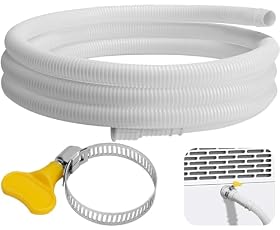
Use continuous drainage if possible. A drain hose can send water to a suitable floor drain or sump location, while a condensate pump may be needed when the drain point is higher than the appliance. The hose must slope correctly unless a pump is installed, and it should not create a trip hazard or discharge where water can damage the building.
A dehumidifier will not fix active water intrusion. Repair leaks, standing water, foundation seepage, plumbing problems, or failed gutters separately.
Which is better for a bedroom?
The answer depends on comfort:
Choose an air conditioner if the bedroom is hot and humid.
Choose a dehumidifier if the room is damp but already cool enough.
Use both only when the room needs substantial cooling and still remains too humid after the air conditioner operates normally.
For a bedroom, noise, airflow, and drainage matter as much as moisture-removal capacity. Avoid placing the unit where its exhaust makes the bed uncomfortable, and follow clearance requirements around the air intake and outlet.
Can you use both at the same time?
Yes, but it is not always efficient. An air conditioner removes heat while a dehumidifier usually adds some heat. Using both may make sense when the air conditioner cannot maintain comfortable humidity, but first check for simpler causes:
Confirm that the air conditioner filter is clean and the outdoor unit has adequate airflow.
Check that doors and windows are closed while cooling.
Look for excessive outdoor-air leakage or visible moisture sources.
Verify that the air conditioner is not short cycling.
Check the indoor humidity with a separate hygrometer if the control display seems unreliable.
If humidity remains high despite normal air-conditioner operation, a dehumidifier may provide supplemental control. Persistent high humidity throughout a home may require an HVAC assessment rather than another portable appliance.
What to look for in a dehumidifier
When humidity control is the main goal, focus on these specifications and features:
Moisture-removal capacity
Capacity is commonly expressed as pints of water removed per day under specified test conditions. Actual removal can vary substantially with room temperature and relative humidity, so do not treat the number as a guarantee for every basement or room.
Operating-temperature range
This is especially important for basements and garages. A model that is not designed for cooler conditions may frost, cycle frequently, or remove less moisture.
Drain options
A bucket is simple but requires regular emptying. A continuous-drain connection is more convenient when a suitable drain is available. A condensate pump can help when gravity drainage is not possible.
Humidistat and automatic restart
A built-in humidistat can cycle the unit toward a selected humidity target. Automatic restart can be useful after a power interruption, provided the manufacturer supports the feature.
Filter access and replacement cost
A washable or replaceable filter protects airflow and the coil. Check how often it must be cleaned or replaced and whether compatible replacement filters are readily available.
A practical decision rule
Use this quick guide:
Hot and humid: Start with an air conditioner.
Cool and damp: Use a dehumidifier.
Hot, humid, and still clammy after cooling: Check the air conditioner first, then consider supplemental dehumidification.
Damp basement with no need for cooling: Use a basement-suitable dehumidifier with continuous drainage.
Humidity caused by leaks or water intrusion: Fix the moisture source before relying on an appliance.
Indoor relative humidity is best judged with a hygrometer rather than by comfort alone. If humidity remains persistently high, condensation or mold returns, or the appliance runs continuously without improving conditions, investigate the building and the equipment instead of simply choosing a larger unit.
When to repair or replace equipment
A dirty filter, blocked drain, full bucket, poor hose routing, or incorrect setup is usually worth correcting. Replace a hose, filter, or drain component when it is cracked, restricted, or no longer seals properly.
A dehumidifier may be near the end of its useful service when it runs continuously but collects little water after basic airflow and drainage checks, repeatedly freezes in suitable conditions, leaks from the cabinet, makes abnormal mechanical noises, or trips a properly functioning circuit. Unplug the appliance and stop using it if the cord, plug, or housing shows damage. For internal electrical, compressor, or refrigerant problems, follow the manufacturer’s service guidance and use a qualified technician when appropriate.
FAQ
Does an air conditioner dehumidify better than a dehumidifier?
An air conditioner can remove a significant amount of moisture while it cools, but a dehumidifier is usually better when humidity control is the main goal. A dehumidifier can run even when the room does not need cooling.
Can a dehumidifier replace an air conditioner?
No. A dehumidifier removes moisture but usually releases heat into the room. It may make a damp room feel less clammy, but it does not provide the same cooling function as an air conditioner.
Why is my room still humid even though the AC is running?
Possible causes include an oversized air conditioner, short cycling, a dirty filter, restricted airflow, open windows or doors, outdoor-air leaks, or a condensate problem. Check basic maintenance and air leakage first; persistent problems may need HVAC service.
Should I run a dehumidifier and air conditioner together?
Only when the air conditioner does not control humidity adequately after basic maintenance and setup checks. The dehumidifier may add heat, so using both can increase energy use and may reduce comfort in a small room.
What is better for a damp basement, an AC or a dehumidifier?
A dehumidifier is usually better for an uncooled basement, particularly during cool or rainy weather. Choose a model suitable for the basement temperature and use continuous drainage when practical.