
A dehumidifier works best in the dampest area with plenty of open airflow around it. In most homes, that means placing it near the center of a basement or in the room with the highest humidity—not pushed against a wall, hidden in a corner, or placed directly beside a heat source. Keep doors and windows closed while it runs, and follow the clearance and drainage instructions for your specific model.
Setup · Mon Sep 07
Where to place a dehumidifier
Place a dehumidifier in the dampest area with open airflow around its intake and exhaust. Keep it level, away from walls and water, and position it near a suitable drain when possible.
Best general location
Place the dehumidifier on a level, hard surface near the middle of the damp area. Leave the manufacturer-recommended clearance around the air intake and exhaust; if the manual does not specify a distance, avoid positioning it tightly against walls, furniture, curtains, or boxes.
A good location should have:
- Open space around the air intake and outlet
- A nearby electrical outlet that can safely handle the appliance
- A level floor that will not be damaged by occasional spills
- Enough room to remove the water bucket and clean the filter
- A practical route for a drain hose, if continuous drainage is available
Do not cover the unit or place objects on top of it. Restricted airflow can reduce moisture removal and may cause the appliance to shut down or overheat.
Continuous drainage hose
 (7 Length Options) Dehumidifier Drain Hose with 3/4 Inch FHT Connector, Featuring Rust-Resistant Brass Fittings…Ebusin
$9.58 as of
View on Amazon Dehumidifier Hose for Drainage 3/4" FHT, Premium Brass Connectors (5FT)XUESNOF
$9.98 as of
View on Amazon 12FT Dehumidifier Drain Hose with 3/4 Inch FHT Connector, Featuring Rust-Resistant Brass Fittings for Leak-Proof…Ebusin
$17.80 as of
View on Amazon
Product prices and availability are accurate as of the date/time indicated and are subject to change. Any price and availability information displayed on Amazon.com at the time of purchase will apply to the purchase of this product.
Where to place a dehumidifier in a basement
For a basement, start in the area with the highest humidity or strongest musty odor. If the basement is mostly open, a central location usually allows the unit to circulate air through more of the space. Keep interior doors open when you want the unit to affect connected basement rooms, but do not block the intake or exhaust.
If the basement has separate rooms, place the dehumidifier in the dampest room first. A single unit may not control humidity effectively throughout a basement divided by walls and closed doors. In that situation, you may need to improve air circulation, move the unit periodically, or use separate units sized for the spaces.
Keep the unit away from:
- Flood-prone spots or areas where water can splash onto it
- Exterior doors that are frequently opened
- Leaky plumbing, active seepage, or standing water
- Furnaces, boilers, radiators, and other heat-producing equipment
- Stored items that could fall against the appliance
A dehumidifier can remove airborne moisture, but it will not solve a plumbing leak, foundation leak, or major drainage problem. Address those sources separately.
Condensate removal for a higher drain
 Upgraded Automatic Condensate Pump for Dehumidifier, 15 FT Vertical High Lift, IPX8 Waterproof Submersible Mini…PmpDrTech
$39.99 as of
View on Amazon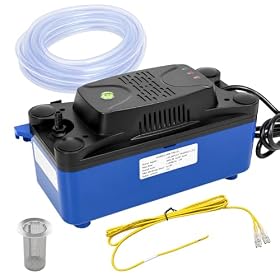 Nurfosttek Upgrade TPS-20 Condensate Pump, for HVAC Dehumidifier CommercialNurfosttek
$49.99 as of
View on Amazon Kesnos 155 Pints Commercial Dehumidifier with Pump & Drain Hose for Up to 7,500 Sq.…Kesnos
$449.99 as of
View on Amazon
Product prices and availability are accurate as of the date/time indicated and are subject to change. Any price and availability information displayed on Amazon.com at the time of purchase will apply to the purchase of this product.
Where to place it in a bedroom or living room
In a bedroom, place the unit where it can draw air freely without blowing directly toward your face or bed. Keep it far enough from the bed to reduce noise and avoid placing it where someone could trip over the power cord.
In a living room, an open area near the center of the room is generally better than a corner behind furniture. If the unit is needed for an adjacent room, leave the connecting door open only if the airflow path remains reasonably clear.
If noise is a concern, run the dehumidifier when the room is unoccupied or use a lower fan setting if your model offers one. Do not put the unit in a closet or cabinet to hide the sound; the restricted airflow can interfere with operation.
Where to place it in a bathroom
A standard household dehumidifier usually should not be placed inside a bathroom where it can be splashed or exposed to excessive water. Instead, place it just outside the bathroom with the door open after bathing, provided the manufacturer permits this setup and the electrical connection is safe.
Use bathroom exhaust ventilation during and after showers as well. A dehumidifier is not a substitute for a properly vented bathroom fan.
Never use an appliance near water if the power cord, outlet, or surrounding area could become wet. Follow local electrical requirements and the manufacturer’s safety instructions. If you are unsure whether an outlet or location is safe, consult a qualified electrician.
Should the dehumidifier be near a window?
Usually, no. A window or exterior door can introduce humid outdoor air, especially during warm or rainy weather. Placing the dehumidifier directly beside one may make it work harder and reduce its effectiveness.
Close windows and exterior doors while the unit runs. If the room has persistent condensation around windows, treat the condensation as a symptom to investigate rather than positioning the dehumidifier directly against the glass.
Positioning for continuous drainage
If you plan to use a drain hose, place the dehumidifier close enough to the drain for the hose to reach without kinks. Many gravity-drain setups require the hose to run downhill continuously. The exact connection and drainage limits vary by model, so follow the manual.
Before leaving the unit unattended, check that:
- The hose is fully seated at the unit
- The hose slopes toward the drain where required
- The drain is open and not backing up
- The hose is not crushed behind furniture
- Water cannot run across a walkway or damage nearby materials
If the nearest drain is higher than the dehumidifier’s outlet, a compatible condensate pump may be necessary. Do not improvise electrical or plumbing connections that the manufacturer does not support.
Should it sit on the floor?
Most portable dehumidifiers are designed to sit upright on a level floor. A hard, stable surface is preferable to carpet when possible because it reduces the chance of tipping and makes leaks easier to notice.
Do not place the unit on an unstable box, narrow shelf, or makeshift platform. Elevating it can be useful for gravity drainage, but the support must be strong, level, and appropriate for the appliance. Follow the manufacturer’s instructions before raising the unit.
How room layout affects performance
Placement is only part of the setup. For better moisture control:
- Close windows and exterior doors.
- Keep the air intake and exhaust clear.
- Set the humidity target according to the manufacturer’s guidance and your comfort needs.
- Empty the bucket or connect approved continuous drainage.
- Clean the filter as directed.
- Allow time for the unit to reduce moisture throughout the room.
If the unit runs continuously but humidity remains high, check for open doors, outdoor air entering the space, water leaks, wet building materials, dirty filtration, or a unit that is too small for the area. Moving the appliance to a more central location may help, but placement cannot compensate for an undersized or malfunctioning dehumidifier.
Common placement mistakes
Putting it in a corner
Corners restrict circulation and can cause the unit to process the same nearby air repeatedly. Move it into a more open area if the room allows.
Blocking the exhaust
Do not aim the exhaust into a wall, curtain, sofa, or storage pile. The warm, dry air needs a clear path to mix with the room air.
Running it with windows open
Open windows can continuously bring in humid air. Keep them closed unless you are deliberately ventilating under conditions that are actually drier outdoors.
Placing it beside a heat source
Heat-producing appliances can affect humidity readings and operating conditions. Leave space around the dehumidifier and follow the required separation from other equipment.
Ignoring the bucket and filter
A full bucket stops many portable units, while a dirty filter reduces airflow. Make both easy to access when choosing the location.
When to move or replace the unit
Move the dehumidifier if its airflow is blocked, the bucket cannot be removed safely, the hose cannot drain correctly, or the unit is exposed to splashes or leaks.
If humidity stays high after improving placement, cleaning the filter, checking the bucket, and ruling out leaks, compare the unit’s capacity with the room conditions and manufacturer guidance. A replacement may be reasonable when the appliance repeatedly shuts off, leaks from the cabinet, makes unusual electrical noises, has damaged wiring, or no longer removes moisture after basic maintenance. Unplug it and stop using it if the cord or plug is damaged, it trips the circuit, or there is a burning smell; electrical repairs should be handled by a qualified professional.
FAQ
Can I put a dehumidifier in the corner?
You can, but an open location is usually better. Keep the air intake and exhaust clear and leave the manufacturer-recommended space around the unit. A tight corner can restrict airflow and reduce moisture removal.
Should a dehumidifier be in the middle of a room?
A central, open location often works well in a large room or open basement because air can circulate around the unit. It does not need to be exactly in the center, as long as furniture and walls do not block the airflow.
Can I run a dehumidifier in a bathroom?
Avoid placing a standard portable dehumidifier where it can be splashed or exposed to water. Placing it just outside the bathroom with the door open may be safer if the manufacturer permits it and the electrical setup is suitable.
Can a dehumidifier sit on carpet?
Many portable units can operate on carpet, but a level hard surface is generally preferable because it improves stability and makes leaks easier to detect. Never place the unit on an unstable platform.
How far should a dehumidifier be from a wall?
Use the clearance specified in the owner’s manual. If no distance is given, leave generous open space around the intake and exhaust rather than pressing the unit against a wall or furniture.