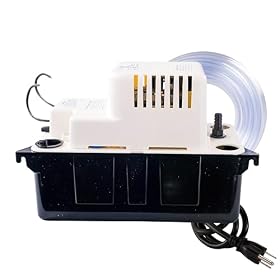
A replacement pump must match your dehumidifier’s model and electrical requirements. Before buying, confirm whether you need an integrated pump assembly or a separate condensate pump, then compare lift height, hose size, fittings, and safety features.
A replacement pump for a pump-model dehumidifier must match the dehumidifier’s model, electrical requirements, tubing connections, and required lift height. The safest purchase is usually the manufacturer-specific pump assembly, but a compatible external condensate pump may work in some installations. Identify the failed component before ordering so you do not replace a hose, float switch, or clogged discharge line unnecessarily.
Identify which pump you need
“Pump-model dehumidifier” can refer to two different setups:
An integrated pump: The pump is built into the dehumidifier and is controlled by its internal electronics or float system.
A separate condensate pump: An external pump sits beside the dehumidifier and receives water through a drain hose.
These are not automatically interchangeable. An integrated replacement pump may include a motor, impeller, float switch, wiring connector, and mounting hardware. A separate condensate pump is a complete external unit with its own reservoir, power cord, inlet, and discharge outlet.
Check the dehumidifier’s rating label and owner’s manual for the exact model number. Search for the model-specific replacement part before considering a universal pump. Manufacturer parts are more likely to match the mounting points, electrical connector, float controls, and built-in safety shutoff.
Confirm compatibility before buying
Model and part number
Start with the full model number, including letters or suffixes. Similar-looking dehumidifiers can use different pumps or control connectors. If the manual lists a pump part number, use that number when searching. Compare photos and connector locations, but do not rely on appearance alone.
If the part number is unavailable, contact the manufacturer or an authorized parts supplier with the model and serial number. Avoid modifying wiring or connectors to make a pump fit.
Voltage and electrical connection
The replacement pump must be designed for the dehumidifier’s electrical system. Check the pump label, service documentation, or replacement-part listing for voltage and connector information.
Do not assume that a pump with the same physical size is electrically compatible. Installing an incorrect-voltage component or bypassing a safety switch can damage the dehumidifier or create a shock and fire hazard. Unplug the dehumidifier before inspecting or replacing an integrated pump, and follow the manufacturer’s service instructions.
Pump capacity and lift height
For a separate condensate pump, compare:
Maximum lift: The vertical distance the pump can move water.
Horizontal run: Long tubing runs add resistance, especially when combined with elbows or narrow tubing.
Discharge flow: The pump must remove water at least as quickly as the dehumidifier produces it.
Discharge tubing size: The outlet must accept the required hose or fitting.
Choose a pump with more lift capacity than your installation requires rather than relying on the listed maximum at the exact limit. Route the hose upward only as far as necessary, avoid sharp bends, and keep the discharge line from being pinched.
Hose and fittings
Measure or identify the existing drain tubing and check whether the replacement pump includes the necessary adapter or check valve. A hose that is too loose can leak or disconnect; a hose that is too small can restrict flow.
The discharge line should have a secure connection at the pump and should terminate at an approved drain location. Do not route water where it can contact electrical outlets, flooring that can be damaged, or areas where a leak could go unnoticed.
Float switch and shutoff behavior
Condensate pumps generally use a float to detect a rising water level. When the float reaches its upper position, the pump should start; when the reservoir empties, it should stop. Some systems also use a high-water safety switch to turn off the dehumidifier or signal an alarm.
Do not permanently bypass a float or high-water switch. If the pump runs continuously, fails to start, or allows the dehumidifier to keep producing water during a pump failure, check the float and drainage system before replacing more parts.
Product prices and availability are accurate as of the date/time indicated and are subject to change. Any price and availability information displayed on Amazon.com at the time of purchase will apply to the purchase of this product.
Check the existing pump before replacing it
A pump that appears to have failed may only be blocked or incorrectly installed. With the unit unplugged, perform these basic checks:
Inspect the filter and water path. A heavily clogged air filter can reduce dehumidifier performance and change how much water reaches the collection system. Clean or replace the filter according to the manual.
Check the hose for kinks and clogs. Disconnect the discharge hose only if the manual permits it, and look for crushed sections, mineral buildup, algae, or debris.
Inspect fittings and seals. Look for leaks around the pump reservoir, hose connections, drain outlet, and pump cover. A loose fitting can make the pump seem ineffective.
Verify the setup. A separate pump should sit level, with its inlet receiving water and its discharge hose rising continuously where possible. Confirm that the hose end is not submerged in a way that prevents drainage.
Check the reservoir and float. Debris can prevent the float from moving freely. Clean accessible parts with a soft cloth and follow the manufacturer’s cleaning instructions.
Listen for pump operation. After reconnecting power, observe the system without touching wet or energized components. A humming pump that does not move water may have a blocked impeller or discharge line. No sound may indicate a control, float, wiring, or motor problem.
Never open an energized dehumidifier or handle exposed wiring. If the pump is integrated into the appliance and the failure requires access to internal electrical components, use the manufacturer’s service procedure or hire a qualified appliance technician.
When replacement is the reasonable next step
Replace the pump when the motor will not operate after the float and hose are clear, the impeller is damaged, the pump leaks from its housing, or the unit repeatedly trips its protection and the manual identifies the pump as the cause.
For an integrated pump, a model-specific assembly is usually the appropriate replacement. For an external system, replacing the complete condensate pump is often more practical than repairing a sealed motor or impeller assembly. Replace the hose as well if it is brittle, permanently kinked, cracked, or contaminated with buildup that cannot be removed.
If the dehumidifier itself is old, has corrosion around the water system, or has a control-board fault in addition to a failed pump, compare repair cost and availability with replacing the appliance. Do not install a generic pump if doing so requires cutting factory wiring, defeating a safety switch, or changing the manufacturer’s drainage design.
Installation and first-use checks
Before installing a replacement:
Unplug the dehumidifier and disconnect power to an external pump.
Move the unit away from standing water and protect the floor from spills.
Match every hose, connector, and mounting point to the manual or replacement instructions.
Keep the pump level and ensure its float can move freely.
Secure the discharge hose and route it to a suitable drain.
Restore power only after all covers and connections are properly installed.
Run a controlled check with the discharge end visible. Confirm that water enters the pump reservoir, the pump starts when the float rises, water exits through the hose, and the pump stops after the reservoir empties. Check again for leaks after several minutes and inspect the drain area periodically during the first operating cycle.
If the pump still will not start, water backs up, or the dehumidifier displays a pump or drainage error, stop using the system until the hose, float, wiring, and replacement part compatibility have been checked. Persistent electrical faults should be handled by a qualified professional or the manufacturer’s service network.
FAQ
Can I use a universal condensate pump as a replacement?
Sometimes, but only when the dehumidifier drains into an external pump and the replacement matches the required voltage, lift height, flow, inlet, discharge tubing, and safety-switch arrangement. An integrated pump generally needs a model-specific replacement assembly.
How do I know whether the dehumidifier pump or hose is faulty?
Check for hose kinks, clogs, loose fittings, and a stuck float first. A humming pump with no water movement often points to a blocked impeller or discharge line, while no pump operation can involve the float, wiring, controls, or motor. Unplug the unit before inspection.
What lift height should a replacement condensate pump have?
Choose a pump whose rated maximum lift exceeds the actual vertical distance to the drain, with allowance for the horizontal hose run, bends, and fittings. Do not operate at the pump’s limit if a higher-capacity compatible option is available.
Should I replace the drain hose when replacing the pump?
Replace it if the hose is cracked, brittle, crushed, leaking, or heavily restricted by buildup. A sound hose can usually be reused if its size and fittings match the replacement pump securely.