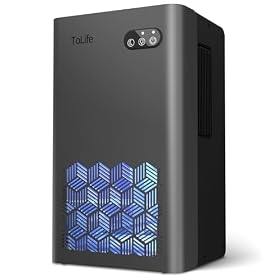
A quiet dehumidifier can help control musty odors and excess humidity near a bedroom closet, but placement matters. Look for a bedroom-friendly sound rating, automatic humidity control, a compact footprint, and drainage that will not require frequent emptying.
A quiet dehumidifier for a bedroom closet wall should be compact, have automatic humidity control, and produce as little operating noise as practical. Place it near—but not inside—the closet unless the manufacturer specifically allows closet installation. The unit needs unrestricted airflow, clearance around its intake and exhaust, and a safe way to collect or drain water.
What to look for
A low published noise rating
Compare the manufacturer’s sound rating in decibels (dB), preferably at more than one fan speed if those figures are provided. A lower number generally means less noticeable noise, but compressor cycling, fan speed, room acoustics, and vibration can affect how loud a unit seems in a bedroom.
Useful bedroom features include:
A low or sleep fan mode
Automatic restart after a power interruption
Adjustable humidity control or a built-in humidistat
A display that can be dimmed or turned off
A timer, if you want operation limited to certain hours
Anti-vibration feet or a stable base
Do not rely on the word “quiet” alone. Check the actual noise specification, operating modes, and return policy.
The right capacity for the space
A dehumidifier’s pint-per-day rating describes how much water it can remove under specified test conditions. It is not a guarantee of the same performance in every bedroom or closet area. A cool room, a very damp basement-like space, poor airflow, or frequent moisture entry can reduce water removal.
For a bedroom and nearby closet, consider:
The total connected area, not only the closet’s floor area
Whether the closet door normally stays closed
Visible condensation, damp clothing, or musty odors
Humidity from an attached bathroom or exterior wall
How often the space becomes damp after showers or weather changes
A small room dehumidifier may be adequate for a mildly damp bedroom. A larger or more capable model may be more suitable when the closet is enclosed, the room is consistently humid, or moisture affects several connected areas. Oversizing is not automatically better: a unit that cycles too quickly may provide less effective moisture control than one properly matched to the space.
Automatic humidity control
Choose a model with an adjustable humidistat rather than one that simply runs continuously. A common starting target for indoor relative humidity is about 40% to 50%, though the appropriate setting depends on comfort, condensation, climate, and household needs.
If the closet contains clothing, shoes, books, or other moisture-sensitive items, avoid setting the unit unnecessarily low. Excessively dry air can be uncomfortable and may affect some materials. Use a separate hygrometer if the built-in reading seems inconsistent with humidity elsewhere in the room.
Safe placement beside a closet wall
Place the dehumidifier on a level, water-resistant surface with the clearances specified in its manual. Do not push it tightly against the wall, block its intake or exhaust, or place clothing and storage bins directly in front of it.
Keep these points in mind:
Leave the manufacturer’s required clearance on every side.
Keep the unit away from curtains, bedding, clothing, and dusty fabric.
Do not operate it where spilled water could reach an outlet or other electrical equipment.
Use a grounded outlet as required by the manual; avoid unsafe extension-cord arrangements.
Do not place it inside a sealed closet unless the manufacturer explicitly permits that use.
Keep the closet door partly open if you are trying to reduce humidity in both the closet and bedroom, provided airflow is not obstructed.
A dehumidifier inside a closed closet can warm the space, recirculate air without removing moisture effectively, and create a water-spill risk. A location just outside the closet, with air able to move through the doorway, is usually the more practical arrangement.
Product prices and availability are accurate as of the date/time indicated and are subject to change. Any price and availability information displayed on Amazon.com at the time of purchase will apply to the purchase of this product.
Drainage: bucket or hose
A water bucket is simple, but it may need frequent emptying in a damp room. Look for a full-tank shutoff and a clear indication that the tank needs attention. The unit should stop safely when the container is full rather than continuing to run.
Continuous drainage can be more convenient if the dehumidifier has a compatible drain outlet. Before buying, check:
Whether the drain must slope continuously downward
Whether the unit needs to sit higher than the drain point
Whether gravity drainage is possible in your bedroom
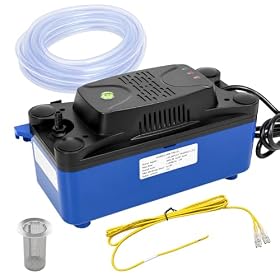
If the drain is lower than the dehumidifier or there is no useful downward slope, a condensate pump may be required. Use only a hose and pump arrangement approved for the appliance, and protect the surrounding floor from leaks.
Product prices and availability are accurate as of the date/time indicated and are subject to change. Any price and availability information displayed on Amazon.com at the time of purchase will apply to the purchase of this product.
Compressor or desiccant design
Most room dehumidifiers use a compressor-based system. These can be efficient in normal indoor temperatures but may be less suitable in unusually cool spaces, depending on the model. Some include automatic defrost to help manage low-temperature operation.
Desiccant dehumidifiers use a different moisture-removal method and may be worth considering for cooler rooms. They can have different energy use, heat output, and sound characteristics. Compare the manufacturer’s operating-temperature range, power requirements, and noise rating rather than choosing solely by technology name.
For a normal heated bedroom, the most important buying factors are usually sound level, humidity control, footprint, drainage, and reliable airflow—not whether the product description uses a particular technology label.
Product prices and availability are accurate as of the date/time indicated and are subject to change. Any price and availability information displayed on Amazon.com at the time of purchase will apply to the purchase of this product.
How to reduce noise after installation
Even a relatively quiet unit can sound intrusive when placed beside a bed or against a resonant wall. Try these adjustments:
Set the unit on a solid, level floor rather than a hollow shelf.
Keep it a short distance from the wall according to the manual.
Check that the filter and intake grille are clean.
Make sure the water tank is seated correctly.
Confirm that the unit is not touching furniture, trim, or storage boxes.
Use the lower fan setting when humidity allows.
Run it before bedtime to reduce humidity, then use a timer or sleep mode if appropriate.
Do not cover the unit to muffle sound. Blocking ventilation can cause overheating or poor operation.
Product prices and availability are accurate as of the date/time indicated and are subject to change. Any price and availability information displayed on Amazon.com at the time of purchase will apply to the purchase of this product.
When a different solution is better
A dehumidifier may not solve the underlying problem if the closet wall has a plumbing leak, roof leak, groundwater intrusion, failed exterior seal, or persistent condensation from inadequate insulation. Investigate the moisture source if humidity returns quickly after the unit runs.
If there is visible mold over a substantial area, damaged building material, or an electrical hazard, avoid disturbing the area unnecessarily and consult an appropriate qualified professional. A dehumidifier can control airborne moisture temporarily, but it does not repair a leak or remove damaged materials.
For a mildly damp closet, a compact bedroom-rated unit with automatic control may be enough. For a consistently wet area, a unit with greater capacity, continuous drainage, or a pump may be the more practical purchase. Replace the appliance when it has a refrigerant-system fault, repeatedly leaks, trips protection devices, or cannot maintain the selected humidity after basic airflow, filter, and drainage checks.
FAQ
Can I put a dehumidifier inside a bedroom closet?
Only if the manufacturer specifically allows it and the closet provides the required airflow and clearances. In most cases, placing the unit just outside the closet with the door open is safer and more effective.
What humidity should I set for a bedroom closet?
A starting setting around 40% to 50% relative humidity is common. Adjust for comfort, condensation, and the materials stored in the closet, and use a separate hygrometer if you need to verify the reading.
How quiet should a bedroom dehumidifier be?
Compare published sound ratings in decibels and look for a low or sleep fan mode. A lower rating generally indicates less noise, but compressor cycling and room acoustics also affect perceived loudness.
Is a drain hose better than emptying the tank?
A hose is more convenient when it can slope continuously to a suitable drain. If the drain is not lower than the unit, you may need a compatible condensate pump or may prefer a model with a larger tank and reliable full-tank shutoff.
Why does humidity return after the dehumidifier shuts off?
The room may be receiving moisture from a bathroom, leak, damp wall, open closet, or outdoor air. Check the moisture source, keep the filter and airflow clear, and confirm the unit is sized for the connected space.