
A dehumidifier’s pint rating tells you how much water it can remove under a specified test condition—not necessarily how it will perform in your basement. Cooler temperatures, low humidity, air leaks, wet materials, and poor airflow can all reduce water removal or make the unit run much longer.
Size & Pints · Mon Sep 07
Pint Ratings Versus Real Basement Performance
A dehumidifier’s pint rating is a standardized capacity figure, not a guarantee of how much water it will remove in your basement. Temperature, humidity, room size, air leakage, and drainage all affect real-world performance.
What do you need help with?
Open an answer, or tell us what we should cover next.
Answered in this guide
Choose a dehumidifier capacity for a basement
Start with the basement’s connected area and moisture condition. A moderately damp, enclosed basement needs less capacity than one with condensation, seepage, laundry activity, wet materials, or another ongoing moisture source.
Understand why a basement removes less water than the label suggests
Cool temperatures can cause frost and defrost cycles, while air leakage, a larger-than-expected space, or continuous moisture sources can reduce water removal compared with the unit’s standardized pint rating.
Diagnose disappointing basement dehumidifier performance
Check the filter, hose, airflow, leaks, bucket, control settings, temperature, and moisture sources before replacing the unit. These checks can reveal setup problems or conditions that limit water removal.
Know when a basement dehumidifier needs replacement
Replacement may make sense after the warranty period when a compressor or control board fails, parts are unavailable, or the unit cannot maintain target humidity after basic airflow, drainage, and moisture-source checks.
Need something else?
Request a topic and help us choose what to build next.
Compare one large dehumidifier with two smaller units
Set up a continuous drain for a basement dehumidifierRead this guide →
Calculate a basement dehumidifier’s running costRead this guide →
Requests help us prioritize the next guide. No email required.
One anonymous request per topic.
What a pint rating actually means
The pint number is a capacity rating measured under standardized temperature and humidity conditions. It allows shoppers to compare units, but it is not a fixed promise that the dehumidifier will collect that amount every day.
A unit advertised with a particular pint capacity may remove less water when:
- The basement is cooler than the rating conditions
- Relative humidity is already fairly low
- Doors, windows, or foundation leaks continually introduce moisture
- The unit has restricted airflow from a dirty filter or tight placement
- The space contains wet concrete, carpeting, drywall, stored materials, or laundry
- The drain container fills and stops the machine
The rating is best treated as a capacity category. It should be combined with room size, basement conditions, and the amount of moisture entering the space.
Basement dehumidifier for a cool or damp space
 21-Pint Dehumidifier, Dehumidifier for Basement with Drain Hose, 1600 sq ftAiusevo
$119.99 as of
View on Amazon Dehumidifier, Dehumidifiers for Home, 98 OZ Water Tank, (1000 sq.ft) Quiet Dehumidifier for Basement Bathroom…PSOS
$59.98 as of
View on Amazon 4500 Sq. Ft Dehumidifier for Basement Quilt Compressor Dehumidifiers for Home with Drain Hose, Energy…MIONJO
$199.99 as of
View on Amazon
Product prices and availability are accurate as of the date/time indicated and are subject to change. Any price and availability information displayed on Amazon.com at the time of purchase will apply to the purchase of this product.
Why basements often get less performance than expected
Cool temperatures reduce moisture removal
Most portable dehumidifiers work by drawing humid air across a cold coil. In a cooler basement, the coil can become cold enough for frost to form, causing the unit to cycle into defrost mode. During defrost, it removes little or no moisture.
This is why a dehumidifier that performs well in a warm room may collect water more slowly in a chilly basement. Check the operating-temperature range in the manufacturer’s specifications. If the basement regularly approaches the lower end of that range, choose a model designed for cooler spaces or address the temperature and insulation problem.
Do not operate a standard portable unit in conditions outside its stated range. Frost buildup, poor performance, and damage can result.
A damp basement may have a continuous moisture source
A dehumidifier can control humidity, but it cannot compensate indefinitely for active water intrusion. Check for:
- Foundation seepage or floor leaks
- Plumbing leaks
- Condensation on cold pipes
- Wet rugs, cardboard, or stored furniture
- An open basement window or door
- Clothes drying indoors
- Inadequate gutters, downspouts, or grading outside
If water is entering the basement, correct the source first. A larger dehumidifier may run constantly without solving the underlying problem.
The room may be larger than the label suggests
Capacity guidance typically assumes a reasonably enclosed space. An open stairwell, connected crawlspace, unfinished storage area, or adjacent rooms can make the effective area much larger than the basement’s main room.
Measure or estimate the full connected area rather than only the room where you plan to place the unit. If doors are usually open, moisture from the connected spaces will affect the load.
Continuous-drain accessory
- 21-Pint Dehumidifier, Dehumidifier for Basement with Drain Hose, 1600 sq ftAiusevo
$119.99 as of
View on Amazon  Dehumidifiers for Home, 95 OZ Water Tank Dehumidifier with Drain Hose, 1000 Sq.Ft Quiet Dehumidifiers…Spacekey
$59.99 as of
View on Amazon (7 Length Options) Dehumidifier Drain Hose with 3/4 Inch FHT Connector, Featuring Rust-Resistant Brass Fittings…Ebusin
$9.58 as of
View on Amazon
Product prices and availability are accurate as of the date/time indicated and are subject to change. Any price and availability information displayed on Amazon.com at the time of purchase will apply to the purchase of this product.
How to compare pint ratings fairly
When comparing dehumidifiers, look beyond the headline number:
- Check that the ratings use comparable test information. Testing standards and label formats have changed over time, so an older rating may not compare directly with a newer label.
- Look for the rated operating temperature. A unit intended for warm rooms may be a poor choice for a cool basement.
- Compare recommended room conditions, not just pints. Manufacturer guidance may distinguish between moderately damp, very damp, and extremely wet spaces.
- Check the control range. A built-in humidistat lets the unit maintain a target relative humidity instead of running continuously.
- Consider drainage. A large water bucket is inconvenient if the unit fills before you return. Continuous hose drainage or a condensate pump may be more practical.
- Check airflow and placement requirements. The unit needs clearance around its intake and exhaust. A cramped corner can reduce performance.
A higher pint rating is not automatically better. An oversized unit may remove moisture quickly but cycle off before distributing dry air evenly, while an undersized unit may run continuously and still fail to reach the desired humidity.
Drainage solution when the outlet is not near a floor drain
 Gasbye Energy Star 2026 Dehumidifier with [𝗥𝗲𝗽𝗹𝗮𝗰𝗲𝗮𝗯𝗹𝗲 Pump] for Basement – [44dB Quiet, Easy to…Gasbye
$299.99 as of
View on Amazon Upgraded Automatic Condensate Pump for Dehumidifier, 15 FT Vertical High Lift, IPX8 Waterproof Submersible Mini…PmpDrTech
$39.99 as of
View on Amazon Moiswell 160 Pints Commercial Dehumidifier with Pump/Drain Hose - BasementsMoiswell
$539.00 as of
View on Amazon
Product prices and availability are accurate as of the date/time indicated and are subject to change. Any price and availability information displayed on Amazon.com at the time of purchase will apply to the purchase of this product.
What real basement performance should look like
A properly sized dehumidifier may run frequently at first. This is normal when the basement air, walls, flooring, and stored materials are holding moisture. As conditions stabilize, the unit should need to cycle less often while maintaining the selected humidity level.
Use a separate hygrometer if you want to verify room humidity. Place it away from the dehumidifier’s exhaust and away from exterior walls, windows, or direct sunlight. A common target for a basement is roughly 40% to 50% relative humidity, but follow building, storage, and health guidance for your situation. Avoid setting the humidity unnecessarily low because that increases operating time and energy use.
Signs that the unit may be too small or facing an unusually high moisture load include:
- It runs nearly continuously but humidity remains high
- The basement has persistent musty odors
- Condensation continues on pipes or windows
- The bucket fills quickly and the unit stops repeatedly
- Several connected rooms remain damp
- The space contains active leaks or visibly wet materials
These signs do not automatically mean you need a larger machine. First eliminate drainage, airflow, filtration, and moisture-source problems.
Replacement airflow filter
 Cooyafan 9 x 11 x 1 MERV 13 Replacement Dehumidifier Filter Compatible with Santa Fe…Cooyafan
$29.99 as of
View on Amazon AprilAire 5881 Washable MERV 8 Dehumidifier Filter for Whole-House Dehumidifiers E080 and E100 or Dehumidifying…Aprilaire
$42.27 as of
View on Amazon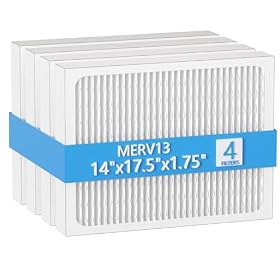 Cooyafan 14 x 17.5 x1.75 MERV 13 Replacement Dehumidifier Filter Compatible with Honeywell DR90 &…Cooyafan
$59.99 as of
View on Amazon
Product prices and availability are accurate as of the date/time indicated and are subject to change. Any price and availability information displayed on Amazon.com at the time of purchase will apply to the purchase of this product.
Choosing capacity for a basement
Start with the basement’s total connected area and its moisture condition. A moderately damp, enclosed basement generally needs less capacity than a basement with condensation, seepage, laundry activity, or wet materials.
Use the manufacturer’s sizing chart as the primary guide, then move up in capacity when the space is unusually damp, poorly sealed, connected to other areas, or exposed to a continuing moisture load. If the basement is very cool, prioritize low-temperature suitability rather than relying only on a larger pint number.
For a large or divided basement, two appropriately placed units can sometimes provide more even coverage than one unit at the far end of the space. Follow electrical requirements and avoid overloading an outlet or extension cord. Portable dehumidifiers should generally be connected directly to a properly grounded wall outlet unless the manufacturer specifically permits another arrangement.
Troubleshooting disappointing performance
Before replacing a dehumidifier, check these items in order.
1. Clean or replace the filter
Unplug the unit, remove the filter, and clean or replace it according to the manual. A clogged filter restricts airflow over the coil and can reduce water removal or cause icing. Let a washable filter dry fully before reinstalling it.
2. Check the hose and air path
If the unit uses continuous drainage, inspect the hose for kinks, blockage, or an uphill section that prevents water from flowing. Make sure the air intake and exhaust have the clearance specified by the manufacturer.
3. Inspect for leaks and bucket problems
Confirm that the bucket is seated correctly and that its float or full-bucket sensor is not stuck. Look for water around the unit, hose connection, or drain outlet. A poorly sealed hose connection can cause drainage problems even when the dehumidifier itself works normally.
4. Confirm the setup and control settings
Check that the humidity setpoint is lower than the current room humidity and that the unit is not in a fan-only, laundry, sleep, or timer mode that changes operation. Keep doors and windows closed when appropriate, and place the unit on a level surface with the required clearance.
5. Check whether the bucket is full
Many units stop automatically when the bucket reaches its limit. Empty it and reseat it firmly, or install a compatible drain hose. For a floor drain located above the hose outlet or for long unattended operation, a compatible condensate pump may be necessary.
6. Consider temperature and moisture sources
If the basement is cold, look for frost on the coil and check the specified operating range. Also inspect for leaks, condensation, wet materials, and air entering from outdoors. Correct those issues before assuming the pint rating is inadequate.
7. Suspect the motor, sensor, or electrical system last
If the unit has power but the fan or compressor does not operate, repeatedly trips a breaker, smells burnt, makes unusual electrical sounds, or shows damaged wiring, unplug it and stop using it. Do not open the sealed refrigeration system or attempt electrical repairs unless you are qualified. Consult the manufacturer or a qualified appliance technician.
When to replace the unit
A replacement may be reasonable when the dehumidifier is outside its warranty period, has a failed compressor or control board, uses a discontinued filter or drain component, or cannot maintain the target humidity after basic airflow, drainage, and moisture-source checks.
Replace rather than repair a unit that has damaged wiring, repeated breaker trips, refrigerant-system problems, or corrosion from persistent leaks unless a qualified technician confirms that repair is safe and economical. When replacing it, choose based on basement temperature, connected area, moisture load, drainage plan, and serviceability—not the pint number alone.
FAQ
Does a higher pint rating always mean better basement performance?
No. A higher rating provides more moisture-removal capacity under test conditions, but basement temperature, airflow, humidity, connected area, and moisture sources can have a greater effect on actual performance.
Why does my dehumidifier collect less water in winter?
Cold air contains less moisture, and a portable dehumidifier may spend time defrosting when the basement is cool. Check the unit’s minimum operating temperature and look for frost on the coil.
How long should a basement dehumidifier run?
It may run frequently or continuously while stabilizing a damp basement. After humidity reaches the setpoint, it should cycle as needed. Continuous operation with high humidity can indicate a clogged filter, poor drainage, excessive connected space, low temperature, or an active moisture source.
Should I buy the largest dehumidifier available?
Not necessarily. Match capacity to the full connected area and moisture level, and check low-temperature suitability. An oversized unit can cycle quickly without distributing dry air evenly, while an undersized unit may never reach the target humidity.
Can a dehumidifier solve a wet basement caused by leaks?
It can remove airborne moisture, but it does not stop water intrusion. Repair plumbing, foundation, drainage, gutter, or grading problems first, and address wet materials that continue releasing moisture.