
A 30-pint dehumidifier is often enough for a moderately damp room or small basement, while a 50-pint or larger unit is usually more suitable for a very damp basement, larger area, or space with persistent moisture. To choose correctly, consider the room’s square footage, humidity level, temperature, and how wet the space is—not just its size.
Size & Pints · Mon Sep 07
How many pints dehumidifier do I need
The right dehumidifier size depends on room area, humidity, dampness, and temperature—not square footage alone. Use this guide to choose an appropriate pint capacity.
What do you need help with?
Open an answer, or tell us what we should cover next.
Answered in this guide
Choose a dehumidifier capacity for a basement
For a basement, start with the space’s area and moisture level, then size upward for persistent dampness, cold temperatures, open areas, or frequent bucket filling. A somewhat larger unit is usually safer than one that is barely adequate.
Calculate the right dehumidifier capacity for a room
Measure the room’s length and width to estimate square footage, include connected areas with open doorways, and adjust the capacity for humidity, dampness, and temperature rather than relying on floor area alone.
Understand what a dehumidifier’s pint rating means
A pint rating tells you how much water the dehumidifier can remove in 24 hours under its rating conditions. It describes moisture-removal capacity, not the size of the water collection bucket.
Set a comfortable indoor humidity target
Aim for roughly 30% to 50% relative humidity in many homes. For a basement, starting around 45% to 50% is often practical, then adjust based on comfort, condensation, and dampness.
Need something else?
Request a topic and help us choose what to build next.
Install a continuous drain hose
Maintain and clean a dehumidifier
Requests help us prioritize the next guide. No email required.
One anonymous request per topic.
Dehumidifier pint sizes at a glance
“Pints” refers to the amount of water a dehumidifier can remove in 24 hours under its rating conditions. It is a capacity measure, not the size of the water bucket.
| Approximate capacity | Typical use |
|---|---|
| 20–22 pints | Small rooms, closets, bathrooms, or mildly damp spaces |
| 30 pints | Bedrooms, living areas, and smaller basements with moderate moisture |
| 40–50 pints | Larger rooms, damp basements, laundry areas, or spaces with frequent moisture |
| 50+ pints or commercial capacity | Very wet areas, large open spaces, crawl spaces, or ongoing water problems |
These are starting points rather than strict rules. A smaller room that is very wet may need more capacity than a larger room that is only slightly humid.
Shop by dehumidifier capacity
 Dehumidifiers for Home, 30 Pint Dehumidifier for Basement with Drain HoseJOYSAILOR
$129.98 as of
View on Amazon SEMKAP 2500 Sq.Ft Max 32 Pints Dehumidifier for Basement with Drain HoseSEMKAP
$152.43 as of
View on Amazon BEDRED Dehumidifier, 95OZ Dehumidifier for Home 1000 sq ft - Quiet with Auto Shut Off…BEDRED
$59.99 as of
View on Amazon
Product prices and availability are accurate as of the date/time indicated and are subject to change. Any price and availability information displayed on Amazon.com at the time of purchase will apply to the purchase of this product.
How to choose the right capacity
1. Measure the area
Multiply the room’s length by its width to estimate square footage. If the space has several connected rooms with open doorways, include the areas that the dehumidifier is expected to serve.
For example, a 20-by-15-foot room is 300 square feet. A finished basement with three connected areas may need to be sized for the combined open floor area, not just the room where the unit sits.
2. Estimate the moisture level
Use these descriptions to adjust the capacity:
- Slightly damp: The space feels clammy, but there is no visible condensation or musty odor.
- Moderately damp: The area smells musty, feels consistently humid, or has occasional condensation.
- Very damp: The floor or walls feel wet, condensation is common, or the area has persistent musty odors.
- Extremely wet: There is standing water, active seepage, flooding, or water entering through walls or floors.
A dehumidifier can manage humidity, but it is not a substitute for repairing leaks, improving drainage, or correcting plumbing problems.
3. Account for temperature
Cold basements and garages require extra care. Standard compressor dehumidifiers may remove less moisture as temperatures fall, and frost can form on the coils. If the space is regularly cool, check the manufacturer’s stated operating temperature range and look for a model designed for low-temperature use.
Do not select a unit based only on its advertised pint number if it will operate in an unheated basement or garage. The capacity under cooler conditions may be lower than the headline rating.
Shop larger-capacity units
 WHOY 80 Pint Dehumidifier for Basement, 50 Pint DOE, Drain Hose, 5000 Sq FtWHOY
$159.98 as of
View on Amazon Manastin 5000 Sq.Ft Dehumidifier for Basement with Drain Hose, 50 Pint Dehumidifiers for Home, 3…Manastin
$129.99 as of
View on Amazon Tehanld 50 Pint Dehumidifier for Basement, Energy Star DehumidifiersTehanld
$149.99 as of
View on Amazon
Product prices and availability are accurate as of the date/time indicated and are subject to change. Any price and availability information displayed on Amazon.com at the time of purchase will apply to the purchase of this product.
Practical sizing guidance by space
Bedroom or small living room
For a small room with mild to moderate humidity, a unit in the 20- to 30-pint range may be sufficient. Choose a larger capacity if the room has condensation, laundry drying indoors, or a persistent musty smell.
Bathroom or laundry area
Bathrooms and laundry rooms often have short periods of high humidity. A permanently installed dehumidifier may not be necessary if an exhaust fan and ventilation solve the problem. If humidity remains high, a compact unit may help, but it should be kept away from splashing water and connected only according to the manufacturer’s safety instructions.
Basement
Basements often need more capacity than an upstairs room of the same size because they are cooler and may receive moisture from concrete floors, foundation walls, or poor drainage.
As a general starting point:
- A small, mildly damp basement may work with about 30 pints.
- A medium or consistently damp basement may need about 40 to 50 pints.
- A large, very damp basement may need a larger unit, more than one unit, or professional moisture control.
Keep doors between basement sections open only if the unit is rated to handle the combined area and air can circulate freely.
Crawl space
Crawl spaces have different ventilation, access, and drainage requirements. Use a dehumidifier specifically approved for crawl-space installation when applicable. The unit may need a permanent drain, remote controls, a low-temperature operating range, and protection from dust or standing water.
Plan continuous drainage
 (7 Length Options) Dehumidifier Drain Hose with 3/4 Inch FHT Connector, Featuring Rust-Resistant Brass Fittings…Ebusin
$9.58 as of
View on Amazon 5FT Leakproof Dehumidifier Drain Hose with 3/4 Inch FHT Rustproof ConnectorBoombamo
$8.99 as of
View on Amazon Dehumidifiers for Home, 95 OZ Water Tank Dehumidifier with Drain Hose, 1000 Sq.Ft Quiet Dehumidifiers…Spacekey
$59.99 as of
View on Amazon
Product prices and availability are accurate as of the date/time indicated and are subject to change. Any price and availability information displayed on Amazon.com at the time of purchase will apply to the purchase of this product.
Is a bigger dehumidifier always better?
Usually, a somewhat larger unit is preferable to one that is barely adequate. It can remove moisture faster and may run less continuously once the target humidity is reached.
However, the largest available unit is not automatically the best choice. Consider:
- Noise: Larger units may be more noticeable in bedrooms or living spaces.
- Energy use: A higher-capacity model can use more electricity, although it may run for fewer hours.
- Air circulation: A unit cannot dehumidify closed rooms effectively if air cannot move between them.
- Low-temperature performance: Capacity can drop in cool areas.
- Drainage: A unit that fills quickly may need a hose or condensate pump instead of manual bucket emptying.
Avoid choosing a very small unit for a large or wet space simply because it costs less. It may run nearly continuously without bringing humidity down to a comfortable level.
Lift condensate to a higher drain
 Upgraded Automatic Condensate Pump for Dehumidifier, 15 FT Vertical High Lift, IPX8 Waterproof Submersible Mini…PmpDrTech
$39.99 as of
View on Amazon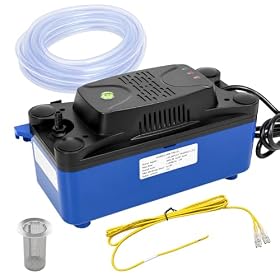 Nurfosttek Upgrade TPS-20 Condensate Pump, for HVAC Dehumidifier CommercialNurfosttek
$49.99 as of
View on Amazon FUJIWARA Condensate Pump Automatic Condensation Drain Removal Mini Quiet Pump for HVAC,Air Conditioner,Dehumidifier,Furnance,Ice Maker,Wall Mounted…FUJIWARA
$38.79 as of
View on Amazon
Product prices and availability are accurate as of the date/time indicated and are subject to change. Any price and availability information displayed on Amazon.com at the time of purchase will apply to the purchase of this product.
What humidity level should you target?
Many homes are most comfortable when indoor relative humidity is roughly 30% to 50%. In a basement, a setting around 45% to 50% is often a practical starting point, though the ideal level depends on temperature, comfort, building materials, and mold concerns.
A separate hygrometer can help you compare the dehumidifier’s displayed reading with humidity in other parts of the room. Place it away from the unit’s exhaust and away from doors, windows, or direct sunlight.
If the unit runs continuously but humidity remains high, the problem may be undersizing, restricted airflow, a dirty filter, unusually high moisture entering the space, or a building leak.
Should I buy one large unit or two smaller ones?
One larger unit may be suitable for an open floor plan where air can circulate. Two smaller units can work better when:
- The area is divided by walls or doors.
- The floors are separate.
- One section is significantly wetter than another.
- A single unit cannot move air across the full space.
- Carrying or draining one large unit would be inconvenient.
Compare the combined capacity, electrical requirements, noise, and drainage needs before choosing two units. Do not use extension cords unless the manufacturer specifically permits them and the cord is appropriately rated.
Drainage affects the right choice
A dehumidifier’s bucket may need to be emptied every several hours in a very damp space. If you want continuous operation, look for a model with a suitable drain outlet and follow the instructions for gravity drainage.
A drain hose generally needs a continuous downward path. If the drain is higher than the dehumidifier or too far away, a compatible condensate pump may be required. Confirm that the hose connection, pump, and dehumidifier are compatible before buying accessories.
When a dehumidifier will not solve the problem
Do not rely on a larger dehumidifier to address:
- Active plumbing leaks
- Foundation seepage
- Flooding or standing water
- Poor roof or gutter drainage
- Water entering through windows or doors
- A failed sump or drainage system
- Moisture trapped behind walls or under flooring
Correct the water source first. If you see widespread mold, structural damage, or recurring water intrusion, consult an appropriate building or moisture professional.
A simple sizing decision
Choose the smallest capacity that comfortably covers the space and moisture level, then adjust upward for cold temperatures, open-plan areas, persistent dampness, or frequent bucket filling.
As a quick starting point:
- Calculate the total square footage.
- Classify the space as slightly damp, moderately damp, very damp, or extremely wet.
- Increase the capacity for basements, cool temperatures, and connected rooms.
- Check the unit’s operating temperature range.
- Plan drainage before installation.
- Address leaks and water intrusion separately.
If humidity does not fall after the unit has run with clean airflow and closed windows and doors, the unit may be undersized—or the space may have a moisture source that needs repair.
FAQ
Is a 30-pint dehumidifier enough for a basement?
It can be enough for a small or moderately damp basement, but a larger or very damp basement may need a 40- to 50-pint unit or more. Cold temperatures and divided spaces can also reduce effective coverage.
Is a 50-pint dehumidifier too big for a bedroom?
Not necessarily, but it may be noisier and use more electricity than needed. For a small bedroom with mild humidity, a 20- to 30-pint unit may be adequate. A larger capacity can make sense when the room is very damp or connected to other open areas.
What does “pints per day” mean on a dehumidifier?
It is the amount of water the unit is rated to remove in 24 hours under specified test conditions. Actual removal can be lower in a cool room or when indoor humidity is less than the rating conditions.
How do I know if my dehumidifier is too small?
Signs include humidity staying high, the unit running nearly continuously, frequent condensation, and a bucket that fills quickly without the room becoming drier. First clean the filter, check airflow, close exterior doors and windows, and look for leaks before replacing the unit.
Can one dehumidifier cover several rooms?
Only if air can circulate freely between the rooms and the unit is sized for the combined area. Closed doors, walls, separate floors, and long distances can prevent one unit from controlling humidity throughout the home.