The best dehumidifier for a basement is sized for the room’s area and moisture load, operates reliably at basement temperatures, and supports convenient continuous drainage. Use this guide to compare the features that matter before buying.
A good basement dehumidifier needs more than a high pint rating. Basements are often cooler, damper, and harder to drain than living spaces, so the best choice combines suitable capacity with low-temperature operation, automatic defrost, a continuous-drain option, and a tank or pump that will not require constant emptying.
Quick recommendations by basement situation
- Small, mildly damp basement: Choose a compact unit sized for the area, preferably with a continuous-drain connection.
- Large or consistently wet basement: Look for a higher-capacity unit with a reliable hose drain and easy-to-clean filter.
- Basement without a floor drain: Choose a model compatible with a condensate pump, or use a separate pump if the manufacturer permits it.
- Cold basement: Prioritize low-temperature operation and automatic defrost. Standard portable units may lose efficiency or ice up in cool conditions.
- Finished basement or nearby bedroom: Give extra weight to noise, humidistat accuracy, and convenient controls.
How to choose the right basement dehumidifier
Match capacity to the space and moisture level
Manufacturers usually describe capacity in pints of water removed per day. The correct capacity depends on both basement size and how wet it is. A small, slightly damp area needs much less capacity than a large basement with visible condensation, seepage, or frequent musty odors.
As a general starting point, compact units may suit smaller spaces, while medium- and higher-capacity units are more appropriate for large, very damp, or partially open basements. If the basement is unusually wet, has exposed concrete, or connects to several rooms, choosing the next capacity class up is often more practical than running a smaller unit continuously.
Do not compare pint ratings without checking the test standard and conditions used by the manufacturer. Ratings can differ depending on temperature and humidity, so the number on the box does not always predict identical real-world performance.
Check the basement temperature range
Cool basements are one of the main reasons a portable dehumidifier may disappoint. As the coil gets cold, frost can form and restrict airflow. A model with automatic defrost periodically warms the coil to reduce icing, but defrost cycles can temporarily reduce moisture removal.
Before buying, check the manufacturer’s minimum operating temperature. If the basement regularly gets close to that limit, a unit designed for cooler spaces may be a better fit. For very cold areas, a purpose-built low-temperature or basement dehumidifier can be more dependable than a basic room unit.
Plan drainage before comparing features
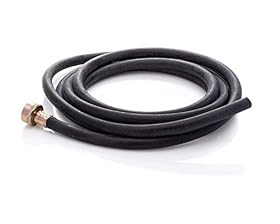
A dehumidifier collects water whenever it removes moisture. The built-in bucket is acceptable if you can empty it regularly, but continuous drainage is usually more convenient in a basement.
Look for:
- A hose connection that matches the manufacturer’s instructions
- A drain location lower than the dehumidifier when using gravity drainage
- A bucket that is easy to remove and reinstall
- An automatic shutoff when the bucket is full
- A pump-compatible design if the drain is higher than the unit
A gravity hose generally needs a continuous downward path. If the drain is across the room, uphill, or above the dehumidifier, use a compatible condensate pump rather than improvising a connection. Follow the appliance and pump instructions, and keep electrical connections away from standing water.
Consider a built-in pump carefully
A built-in pump can move condensate to a sink, utility drain, or other elevated outlet. It is useful when gravity drainage is impossible, but it adds another component that can clog or fail.
Confirm the pump’s intended lift, hose requirements, and automatic operation before purchasing. If a unit does not include a pump, a separate condensate pump may work if the dehumidifier provides a suitable drain outlet and the combination is installed according to both manufacturers’ instructions.
Look for an adjustable humidistat
A humidistat lets you set a target relative humidity rather than running the compressor continuously. For many basements, a setting around 45% to 55% relative humidity is a reasonable starting point. Lower settings may use more energy and can make a space unnecessarily dry.
Use a separate hygrometer if you need to verify conditions in another part of the basement. The humidity near the dehumidifier may not match the humidity in a closed room, storage area, or corner with poor air circulation.
Evaluate noise and placement
Compressors and fans create more noise than a small air purifier. Noise matters less in an unfinished utility area than in a finished basement, office, or guest room.
Place the unit on a level, stable surface with the clearances specified by the manufacturer. Keep air intake and exhaust areas unobstructed, and avoid pushing the unit tightly against a wall. Better air circulation helps the dehumidifier sense and process the room air more effectively.
Prefer an accessible, washable filter
Dust and pet hair can restrict airflow, reduce performance, and contribute to icing. A removable filter that can be cleaned easily is more useful than a filter that is difficult to access.
Check the cleaning schedule in the manual. Disconnect power before removing or washing a filter, and reinstall it only when it is completely dry. Replace a damaged or non-serviceable filter with the correct part rather than operating the unit without filtration.
Compare energy use, not just capacity
A larger unit is not automatically the most efficient choice. Oversizing can reduce run time, but an unnecessarily large appliance may cost more to purchase and can cycle in ways that do not improve comfort.
For a frequently used basement, compare the manufacturer’s energy information and look for recognized efficiency certification where available. The most economical choice is usually a properly sized unit that can drain continuously and maintain the target humidity without constant manual attention.
Important basement-specific features
Automatic restart
Automatic restart restores operation after a power interruption. This is useful for basements that are unattended for long periods, although you should still inspect the appliance and drainage system periodically.
Full-tank shutoff
A full-tank shutoff prevents the unit from continuing to operate when its bucket is full. It is especially important if you rely on the bucket rather than a hose. Make sure the bucket is seated correctly; a partially engaged bucket can make the unit stop even when it is not full.
Timer and remote controls
Timers and app controls can be convenient, but they should not outweigh basic drainage, temperature, and serviceability. Remote features are most useful when the basement is difficult to access or you want alerts about a full tank or operating status.
Air filtration claims
A dehumidifier filter protects the appliance and catches some airborne dust. It is not a substitute for a dedicated air purifier or for correcting mold, leaks, or water intrusion. Do not choose a dehumidifier solely because of general air-cleaning claims.
Common buying mistakes
A square-footage estimate cannot account for seepage, condensation, laundry activity, exposed concrete, or connected rooms. Treat the manufacturer’s sizing chart as a starting point and increase capacity when the moisture load is unusually high.
Ignoring drainage
A unit with a large bucket can still be inconvenient if it fills quickly. Confirm that the hose outlet, drain height, and pump arrangement work in your basement before buying.
Using a standard unit in a cold space
If the appliance is not designed for the basement’s temperature, frost and frequent defrosting can limit performance. Check the operating range instead of assuming every portable dehumidifier works equally well in cool conditions.
Placing the unit next to a wall or obstruction
Restricted airflow can reduce water removal and increase icing. Follow the specified clearance around the intake and exhaust, and leave doors between connected areas open only when that supports the intended airflow pattern.
When a dehumidifier is not the complete solution
A dehumidifier removes moisture from air, but it does not repair foundation leaks, plumbing failures, roof drainage problems, or groundwater intrusion. Address visible water and persistent dampness at the source. Improve ventilation where appropriate, direct downspouts away from the foundation, and consider professional evaluation for recurring seepage or mold.
If the basement remains wet despite correct sizing, unobstructed airflow, a clean filter, and a working drain, investigate the building rather than simply buying a larger appliance.
Bottom line
For most basements, prioritize a correctly sized dehumidifier with automatic defrost, an adjustable humidistat, continuous-drain capability, a washable filter, and an operating temperature range suitable for the space. Choose a pump when the available drain is higher than the appliance, and choose a low-temperature model when the basement stays cool. The best unit is the one that can maintain a safe humidity level with minimal bucket emptying and without creating a new drainage problem.