A cold cellar needs a dehumidifier designed for low-temperature operation. Here is what to check before buying, including frost control, drainage, humidity settings, and the choice between compressor and desiccant models.
A low-temperature dehumidifier for a cold cellar must keep removing moisture when ordinary compressor units begin to ice up or shut down. Before buying, check the unit’s published operating-temperature range, confirm that it has automatic defrost or another low-temperature feature, and plan how collected water will drain. For very cold spaces, a desiccant dehumidifier may be a better fit than a conventional compressor model.
What to look for in a cold-cellar dehumidifier
A published low-temperature operating range
Do not choose by moisture-removal capacity alone. A dehumidifier may perform well in a warm basement but struggle in a cellar where temperatures remain low.
Look for a manufacturer-specified minimum operating temperature that is at or below the cellar’s actual temperature. Measure the space during its coldest period rather than relying on the average indoor temperature. If the cellar can approach freezing, verify the operating range carefully; some units are not designed to run near those conditions.
Automatic defrost or frost control
Compressor dehumidifiers cool an evaporator coil to collect water. In a cold room, the coil can become cold enough for frost to form, reducing airflow and moisture removal. A low-temperature model should include an automatic defrost system or another feature intended to control frost.
Defrost helps, but it does not make every compressor unit suitable for an unheated cellar. The unit still needs to be operated within its specified range, with enough clearance for airflow.
Continuous drainage
A cellar may need dehumidification for long periods, so emptying a bucket every day is inconvenient. A useful unit should have a continuous-drain connection, provided the drain hose can run downhill to a suitable drain.
Check the following before purchase:
Whether the drain outlet accepts a standard hose or requires a particular fitting
Whether the hose must slope continuously downward
Whether the drain is close enough for the hose to reach
Whether the drain could freeze in the coldest conditions
Whether the unit stops when the bucket is full, even with a hose attached
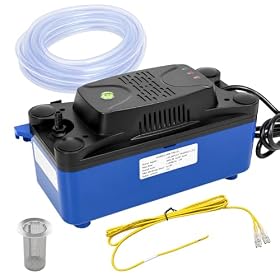
If the drain is higher than the dehumidifier or too far away for gravity drainage, you may need a compatible condensate pump. Use only a pump and hose arrangement approved or supported by the dehumidifier manufacturer.
A humidity control that matches the space
A built-in humidistat lets the unit cycle on and off instead of running continuously. Choose a model with an adjustable target humidity and place a separate hygrometer elsewhere in the cellar so you can confirm the room is drying evenly.
Avoid setting the target unnecessarily low. Excessive operation wastes electricity and may dry stored materials more than needed. The appropriate target depends on the cellar’s construction, stored items, ventilation, and mold risk.
Compressor or desiccant: which is better?
Compressor dehumidifiers
Compressor, or refrigerant, dehumidifiers are common and can be efficient in moderately warm spaces. Their main limitation in a cold cellar is reduced performance and possible frost formation as temperatures fall.
A compressor model can be appropriate when its published low-temperature range covers the space and it includes effective frost control. It may also be the practical choice when the cellar is cool but not close to freezing and continuous drainage is important.
Desiccant dehumidifiers
Desiccant units use an absorbent material rather than a cold evaporator coil. They generally avoid the same coil-freezing problem and can be suitable for colder environments.
Trade-offs can include higher electricity use, heat released into the room, and different moisture-removal performance than a compressor model. Check the manufacturer’s specifications for the intended temperature range, water-removal rate, noise, and drainage method.
For a cellar that stays very cold for much of the year, a desiccant unit may be the safer starting point. For a cool but less extreme space, a low-temperature compressor unit may offer a better balance of operating cost and capacity.
Product prices and availability are accurate as of the date/time indicated and are subject to change. Any price and availability information displayed on Amazon.com at the time of purchase will apply to the purchase of this product.
Size the unit for the cellar, not just its floor area
Capacity labels are based on standardized test conditions and may not represent performance in a cold cellar. A unit rated for a certain amount of water removal in a warm test environment may collect substantially less water in a colder room.
Consider these factors:
Cellar floor area and ceiling height
How damp the room is at the start
Whether the space has exposed soil, masonry, or a dirt floor
Water intrusion, condensation, or plumbing leaks
How often the door is opened
Whether adjacent rooms are connected by open doors
The lowest operating temperature
If the cellar is severely damp, begin by addressing bulk water problems. A dehumidifier cannot compensate for active seepage, flooding, failed exterior drainage, or a plumbing leak. Those issues should be repaired before selecting a larger appliance.
Product prices and availability are accurate as of the date/time indicated and are subject to change. Any price and availability information displayed on Amazon.com at the time of purchase will apply to the purchase of this product.
Drainage and placement matter as much as capacity
Place the dehumidifier on a stable, level surface with the clearances required by its manual. Do not push it tightly against a wall, stored boxes, or insulation. Restricted airflow can reduce performance and contribute to overheating or frost.
Keep the air intake and outlet clear, and avoid placing the unit where dripping water could reach an electrical connection. Use a grounded outlet and do not use an extension cord unless the manufacturer specifically permits it. In a damp cellar, electrical protection such as GFCI protection may be required by local code; consult a qualified electrician if you are unsure.
For gravity drainage, route the hose downward without sharp bends or low spots that can trap water. Secure the hose so it cannot pull out of the outlet and discharge onto the floor.
What specifications affect the buying decision?
Prioritize these specifications in order:
Minimum operating temperature: It must cover the coldest conditions in the cellar.
Frost-control method: Automatic defrost is important for many low-temperature compressor units.
Drainage options: Confirm gravity-drain compatibility or pump support before buying.
Moisture-removal capacity at low temperature: Warm-room capacity alone can be misleading.
Humidistat range and controls: Adjustable humidity control is more useful than a simple on/off switch.
Noise and heat output: Important if the cellar is below living areas or stores temperature-sensitive goods.
Filter access and replacement availability: A washable or replaceable filter helps maintain airflow.
Do not assume that a larger rated capacity automatically makes a unit better for a cold cellar. A model with a suitable temperature range and reliable drainage is usually a better choice than a more powerful unit that is only rated for warmer conditions.
Setup tips for better moisture removal
Measure temperature and relative humidity before selecting and installing the unit.
Close cellar doors and windows while the dehumidifier operates, unless ventilation is specifically required.
Keep the filter clean according to the manufacturer’s instructions.
Check the drain hose after installation and again after the first extended run.
Leave space around the unit for intake and exhaust airflow.
Keep cardboard, textiles, and other absorbent materials away from the appliance.
Inspect the cellar for leaks, condensation on pipes, and water entering through walls or floors.
Use a separate hygrometer to verify conditions away from the dehumidifier.
When a dehumidifier is not enough
Persistent dampness may be caused by groundwater, poor exterior drainage, foundation seepage, condensation on cold pipes, or inadequate air sealing. If the room remains wet despite correct operation, investigate the moisture source instead of simply buying a larger unit.
A replacement dehumidifier is reasonable when the existing unit has a failed compressor, repeated electrical faults, a damaged sealed system, or a control problem that makes it unsafe or uneconomical to repair. Disconnect power before inspecting the unit, and do not open the sealed refrigerant system. Refrigerant or electrical repairs should be handled by a qualified professional.
Bottom line
Choose a dehumidifier specifically rated for the coldest temperature in your cellar. Favor automatic frost control, dependable continuous drainage, accessible filtration, and a humidistat. If the space is close to freezing for long periods, compare desiccant models with low-temperature compressor units rather than assuming a standard basement dehumidifier will work.
FAQ
What type of dehumidifier is best for a cold cellar?
A low-temperature compressor dehumidifier with automatic frost control can work in a cool cellar if its published operating range covers the space. For very cold conditions, a desiccant dehumidifier may be more suitable because it does not rely on a cold evaporator coil to collect moisture.
Can a regular dehumidifier work in an unheated cellar?
Sometimes, but only if the manufacturer rates it for the cellar’s lowest temperature. A regular compressor unit may frost over, pause frequently, or collect little water when operated below its intended range.
Does a dehumidifier need a drain hose in a cellar?
A drain hose is usually preferable for long-term use. Gravity drainage works when the hose can run continuously downhill. If the drain is higher than the unit, a compatible condensate pump may be necessary.
Why does a dehumidifier stop collecting water in a cold room?
Low temperature can reduce compressor performance and cause frost to form on the evaporator coil. Check the operating range, inspect for frost, clean the filter, confirm adequate airflow, and allow the unit to complete its defrost cycle. Persistent problems may indicate that the unit is unsuitable for the space.
How do I know if my cellar needs a dehumidifier or waterproofing?
A dehumidifier handles moisture in the air, but it cannot solve active leaks, groundwater intrusion, flooding, or major condensation problems. If water is entering through walls or floors, address the source first and use a dehumidifier for remaining humidity.