
A dehumidifier does not always need to be raised off concrete. If the floor is level, dry, and free of standing water, follow the unit’s placement instructions. A stable platform can be useful in a damp basement, where minor flooding is possible, or when you need more height for a gravity-drain hose. Raising the appliance will not make a cold room warmer or necessarily let the unit operate below its rated temperature range.
Setup · Sat Sep 19
Keeping a dehumidifier off the cold concrete
A dehumidifier can usually sit on concrete if the floor is level and dry, but a sturdy raised platform can help keep it clear of dampness and make gravity drainage easier. It will not, by itself, solve problems caused by a room that is too cold for the unit.
Why lift a dehumidifier off concrete
Concrete can stay damp or cold, but the main reasons to elevate a dehumidifier are practical: keeping it above small amounts of floor moisture, reducing the chance of water reaching the base, and creating clearance for a drain hose. Elevation can also make the bucket easier to remove on some models.
If the floor is dry and the manual permits floor placement, setting the unit directly on concrete is generally fine. Do not place it where water can collect around the cord, plug, or appliance base.
Stable raised support for a dehumidifier
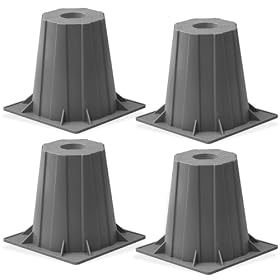 SZHY-LINK 5879 Dehumidifier Riser Kit, Dehumidifier Stand Compatible with Aprilaire 1820, 1830, 1850, E070, E080,…SZHY-LINK
$27.99 as of
View on Amazon ARGENDON Dehumidifier Riser Kit, 6 Inch Heavy-Duty Universal Dehumidifier Stand for Optimal Drainage, Vibration and…ARGENDON
$29.99 as of
View on Amazon Heavy-Duty Stainless Steel Appliance Base Platform – 1100lb Capacity, Rustproof Stand for AC, Refrigerator, Dehumidifier,…Generic
$517.63 as of
View on Amazon
Product prices and availability are accurate as of the date/time indicated and are subject to change. Any price and availability information displayed on Amazon.com at the time of purchase will apply to the purchase of this product.
Choose a stable, level platform
Use a rigid stand or platform that is rated to support the dehumidifier’s weight, including a full water bucket if the bucket remains in place. The surface should be level, broad enough to support the unit’s feet, and resistant to moisture.
Avoid cardboard, loose stacked boards, unstable crates, and soft foam that can compress or tilt. Do not cover an air intake, exhaust, drain opening, or any ventilation space beneath the unit. Leave the clearances specified in the manual, and check that the appliance cannot slide or tip when the bucket is removed.
Before moving the unit, switch it off, unplug it, and empty the bucket. Once it is positioned, make sure the power cord is not stretched, pinched, or lying where water can reach it. If the unit rocks, the platform shifts, or the floor is uneven, move it to a more secure location rather than trying to stabilize it with loose shims.
Pumped drainage when a gravity hose will not work
 PmpDrTech Upgraded Smart Automatic Dehumidifier Pump 15FT High Lift Vertical Drain Over 100FT Horizontal IPX8…PmpDrTech
$49.99 as of
View on Amazon Upgraded Automatic Condensate Pump for Dehumidifier, 15 FT Vertical High Lift, IPX8 Waterproof Submersible Mini…PmpDrTech
$39.99 as of
View on Amazon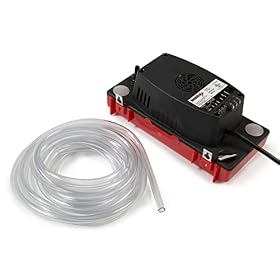 AprilAire 4856 Low Profile 120V Dehumidifier Condensate Pump for AprilAire Crawl Space, Basement, Whole-House Dehumidifier…Aprilaire
$129.31 as of
View on Amazon
Product prices and availability are accurate as of the date/time indicated and are subject to change. Any price and availability information displayed on Amazon.com at the time of purchase will apply to the purchase of this product.
Check the drain before raising the unit
A raised dehumidifier may make gravity drainage easier, but only if the hose can run continuously downhill from the drain outlet to a suitable drain. A hose that rises, kinks, or sags can prevent water from draining properly and may cause a leak or a full-bucket shutoff.
Confirm that the hose size and connection match the manufacturer’s instructions. If the drain is higher than the outlet or a downhill route is not possible, a compatible condensate pump may be needed. Do not raise the unit onto an unstable surface just to gain hose height.
Elevation does not fix a room that is too cold
A cold concrete floor is different from a cold room. Many compressor dehumidifiers have a minimum operating temperature; below that, performance can drop or the unit may need to defrost more often. Raising the appliance a few inches does not change the surrounding air temperature enough to overcome a limit stated in the manual.
Check the manufacturer’s operating-temperature range if the unit runs poorly in a cold basement. If the space is below that range, use a dehumidifier designed for colder conditions or address the room temperature and moisture source as appropriate. Do not add a heater near the dehumidifier unless the appliance instructions specifically allow it.
When to use a platform—and when not to
A raised platform makes sense when the floor is occasionally damp, you need clearance for a correctly routed gravity drain, or the manufacturer recommends keeping the base off the floor. Skip elevation if it makes the unit unstable, blocks airflow, or conflicts with the manual. A dry, level concrete floor is often a suitable location on its own.
If water has reached the electrical parts, unplug the unit only if you can do so safely without standing in water, and have it inspected before using it again. Replace a damaged cord or other part only with a manufacturer-approved replacement; have electrical repairs handled by a qualified professional.
FAQ
Can a dehumidifier sit directly on a concrete floor?
Usually, if the floor is level and dry and the manufacturer allows floor placement. Keep the unit away from standing water and preserve the required airflow clearances.
Will raising a dehumidifier make it work better in a cold basement?
Not necessarily. Elevation can help keep the base clear of floor moisture, but it does not meaningfully warm the surrounding air. Check the unit’s minimum operating temperature.
What should I put under a dehumidifier?
Use a rigid, level, moisture-resistant platform rated for the unit’s weight. Avoid soft or unstable materials, and do not block vents, openings, or required clearance.
Can I raise a dehumidifier to help it drain?
Yes, if the hose runs continuously downhill from the outlet to the drain and the unit remains stable. If the drain is higher than the outlet, a compatible condensate pump may be needed.